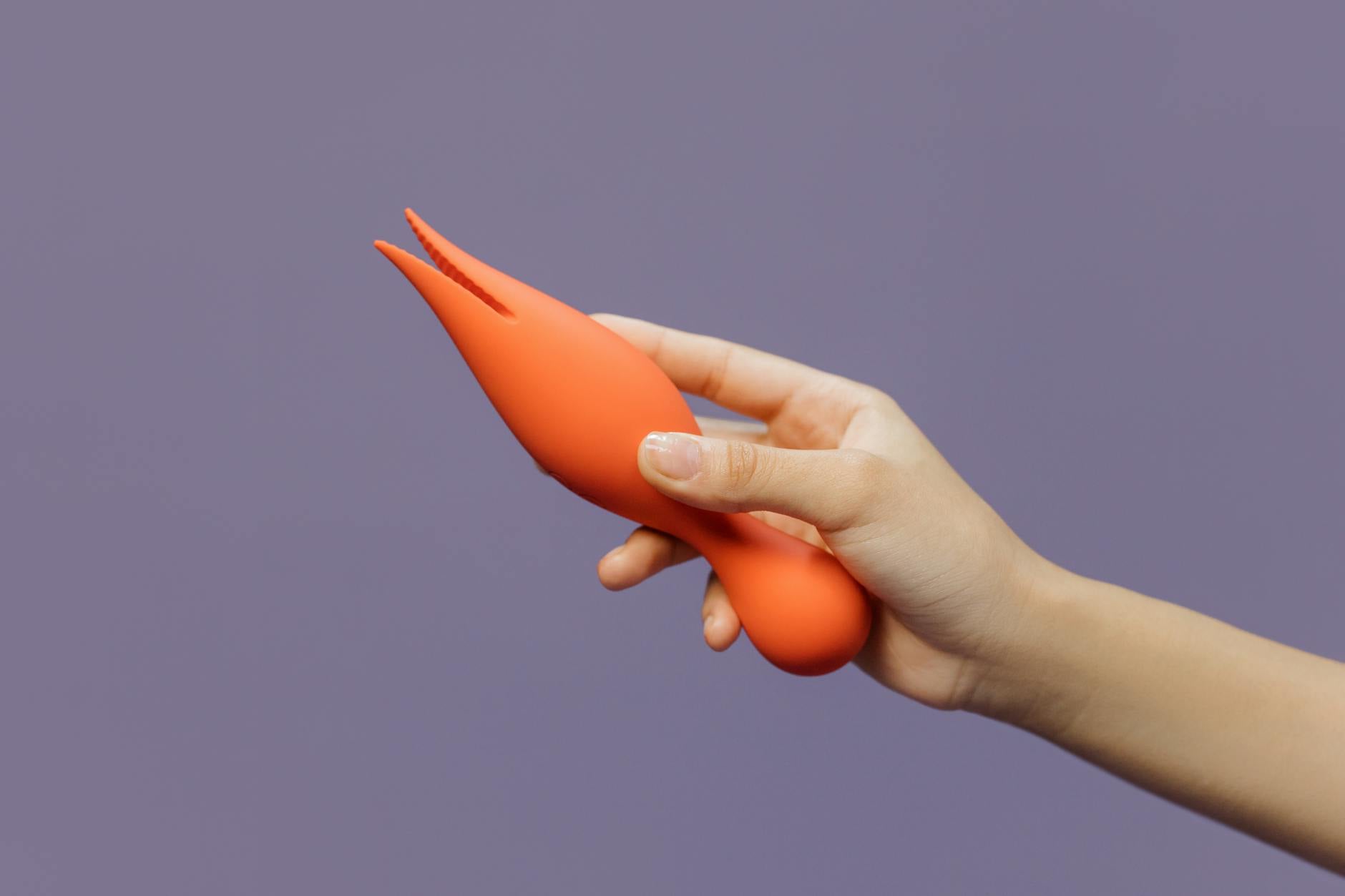
How Lemon Vibrators Compare to Traditional Vibrators for Clitoral Sensitivity
Here's what's actually different
Let me start with the most important thing: a lemon clitoral vibrator and a traditional vibrator are not the same thing in a different shape. They're fundamentally different technologies. One uses vibration. One uses air suction. That single difference changes everything about what you feel, how your body responds, and whether it works when other toys haven't.
If you've tried traditional vibrators and felt either too much or not quite right, the reason might not be you. It might be the mechanism.
What traditional vibrators actually do
A traditional vibrator uses oscillation. The motor moves back and forth or in circles at high speed, creating sustained vibration against the clitoris. Think of it as percussion. The stimulation comes from repeated mechanical contact and friction.
For many people, this feels incredible. For others, it's the problem.
Why traditional vibrators can feel overwhelming:
That sustained contact creates intense, continuous friction. If your clitoris is sensitive, this can cross the line from pleasure into numbness or overstimulation in minutes. Your nerve endings get fatigued. The sensation flattens. You might find yourself chasing sensation higher and higher without actually feeling more.
Or the vibration itself feels too scattered. You want focused stimulation but traditional vibrators spread the sensation across a wider area. For people with vulvodynia, certain types of nerve pain, or just preference for precision, this diffusion is frustrating.
Why they work brilliantly for others:
If your clitoris prefers intensity and you like building sensation gradually, traditional vibrators are efficient. The speed is easy to control. The sensation is predictable. Many people use them for years and never feel the need to explore alternatives.
But here's the thing: "works for many people" doesn't mean "works for you."
What air-suction lemon vibrators do differently
An air-suction lemon vibrator, by contrast, doesn't touch your clitoris with direct friction at all. Instead, it creates a gentle suction and pulse pattern around the clitoral area. The stimulation is more like a rhythmic squeeze than a vibration.
Why this matters: you're not fighting friction fatigue because there isn't friction. The nerve response stays fresh longer. The stimulation feels concentrated rather than spread across an area. And because the mechanism doesn't rely on direct mechanical contact, it works beautifully for people whose clitorises find that contact uncomfortable.
The sensation profile is completely different:
Traditional vibrators feel like direct stimulation, building intensity quickly and requiring you to manage overstimulation. Lemon clitoral vibrators feel more like waves of sensation, deeper and more diffuse, building sensation in a way that often feels easier to sustain. Many people report orgasms that feel more full-body with air suction because the stimulation isn't localized to mechanical friction.
This is especially true for people who experience how lemon vibrators improve sensation when arousal feels disconnected from pleasure. When pleasure feels muted, the gentler approach of suction can actually reconnect sensation in a way that intense vibration cannot.
The sensitivity variable you haven't considered
Here's where most guides miss the mark: clitoral sensitivity isn't just a spectrum from low to high. It's contextual.
Your sensitivity changes across your cycle, with stress, with medication, with how you're feeling about your body that day. Someone might love intense traditional vibration on day 15 of their cycle and find it unbearable on day 8. Someone else might move into a new phase of life and discover that what worked for years suddenly doesn't anymore.
Lemon vibrators' strength is adaptability. Because the stimulation profile is gentler and based on pulsing rather than vibration, you can use them more frequently without nerve fatigue. You can layer sensation differently. You can find pleasure at lower intensity settings that traditional vibrators don't offer at all.
That matters if your sensitivity shifts regularly or if you've found yourself needing more and more intensity from a traditional vibrator over time. That upward creep often means overstimulation has worn out your nerve response, not that you actually need "more power."
The surface contact piece
Traditional vibrators typically have a smaller contact surface, which concentrates stimulation into a point or narrow band. This is why they feel so direct. Lemon vibrators, by design, have a wider cup or chamber that creates broader stimulation.
For some bodies, that broader contact feels inclusive and full. For others, it feels less precise than they want.
There's no "better." But it's useful to know which profile matches your body before you buy. If you've always felt that traditional vibrators miss a certain spot or create numbness on one side of your clitoris, the broader contact of a lemon vibrator might be the fix.
Conversely, if you know you want intense, pinpointed sensation, a high-powered traditional vibrator might serve you better than an air-suction device.
What the research actually shows
Studies on air-suction stimulation (like the Lemon) show consistently higher reported satisfaction among people who had previously struggled with orgasm or felt numbness with vibration. The mechanism is less clear from sensation alone and appears to engage different nerve pathways than direct vibration does.
What doesn't show up in research: one is universally better. What does show up is that they serve different bodies and different needs. People with high sensitivity often prefer the gentler approach. People accustomed to traditional vibrators sometimes need to recalibrate their expectations when switching to suction because the sensation builds differently.
Mixing both approaches
Honestly, many people end up using both. A traditional vibrator during partnered sex for speed and intensity. A lemon vibrator for solo exploration when you want to build sensation slowly or when you're recovering from overuse of the more intense mechanism.
Or the reverse: intense suction when you want to really feel, gentler vibration when you want ease.
Neither approach is a one-time purchase. They're tools, and they work best when you're thinking about what you're trying to accomplish in that moment rather than defaulting to "what's familiar."
How to actually test which one suits you
If you've never tried air-suction stimulation, start with lower intensity settings than you'd use with a traditional vibrator. The sensation builds differently. Your nerve response might be fresher than you're used to because you're not fighting friction fatigue.
Give yourself at least three or four sessions before deciding. Your body needs time to learn a new stimulation pattern. What feels odd on day one often feels intuitive by day three.
If you find that you're reaching for lower intensity settings and staying there longer without needing to escalate, that's a signal that the broader, gentler approach of a lemon vibrator might be solving something that traditional vibration was creating: that constant push for more.
The realignment you might need
Here's something nobody talks about: switching from traditional vibrators to air suction can feel like losing sensation at first. You're used to that sharp, localized buzz. Suction feels softer, rounder, less immediately intense.
But after a few uses, many people report that they prefer the softer approach because they can actually sustain pleasure longer without that overstimulation wall. The sensation doesn't flatten. You don't run out of novel feeling halfway through.
If you choose between traditional vibrators and lemon clitoral vibrators after trying both, you're not compromising on pleasure. You're choosing the technology that matches your nervous system.
That's the whole point.
People also ask
Are lemon vibrators less powerful than traditional vibrators?
"Power" is measured differently across the two technologies. Traditional vibrators are measured in vibrations per minute. Lemon vibrators are measured in suction intensity and pulse frequency. One isn't objectively more powerful. A gentle suction vibrator can produce more intense sensation for some bodies than a high-powered traditional vibrator because the mechanism itself is different. It depends entirely on what your clitoris responds to.
Can I use a lemon vibrator if I've always used traditional vibrators?
Yes, and most people adapt within a few sessions. Start at lower intensity than you'd use with a traditional vibrator. Expect the sensation to build more gradually. Give your body three to four uses before deciding whether you like it. Many longtime traditional vibrator users find that switching occasionally prevents the phenomenon of needing more and more intensity over time.
Do lemon vibrators cause numbness like some traditional vibrators do?
Not in the same way. Because the stimulation is suction rather than direct vibration, your nerve endings experience a different type of stimulation pattern. You're less likely to hit that overstimulation wall where sensation flattens. That said, overuse of any toy can create temporary numbness. The design of air-suction vibrators generally allows for longer, more sustainable use than traditional vibrators for many people.
Which type of vibrator is better for sensitive clitorises?
For clitoral sensitivity, air-suction vibrators like the Lemon often work better because they don't rely on direct mechanical friction. The broader contact surface and pulsing mechanism tend to feel less overwhelming. That said, "sensitive" is different for everyone. Some people with sensitive clitorises prefer lower-intensity traditional vibrators to the suction approach. Testing both is the only way to know your preference.
Can I use a lemon vibrator if I take antidepressants that dull sensation?
Yes, in fact, many people taking SSRIs report better results with air-suction vibrators than with traditional vibrators. Because the mechanism engages different nerve pathways, it can sometimes bypass the numbness that traditional vibration can't penetrate. That said, medication effects vary widely. What works for one person on the same medication might not work for another. The best approach is trying different tools and noticing what actually produces sensation for your body specifically.
How do I know if I should switch from traditional vibrators to a lemon vibrator?
You might benefit from switching if you experience sensation numbness quickly, need constantly increasing intensity, feel that direct vibration is too overwhelming, or find that your traditional vibrator works sometimes but not reliably. You might also switch simply out of curiosity or preference for how the different sensation feels. Neither is objectively better. The right tool is the one your body enjoys using.
The takeaway
Traditional vibrators and lemon clitoral vibrators aren't competing products. They're different technologies with different sensation profiles. One isn't superior. One is better suited to your nervous system, your preferences, and what you're trying to accomplish in that moment.
The smartest approach is knowing what each one does, testing the one that sounds like it might match your body, and building a toolkit that includes what actually works for you rather than what's supposed to work universally.
Your pleasure doesn't need to conform to one tool. It needs the right tool.
Have questions about which approach might suit you? Reach out to us. We're here to help you figure out what actually works.