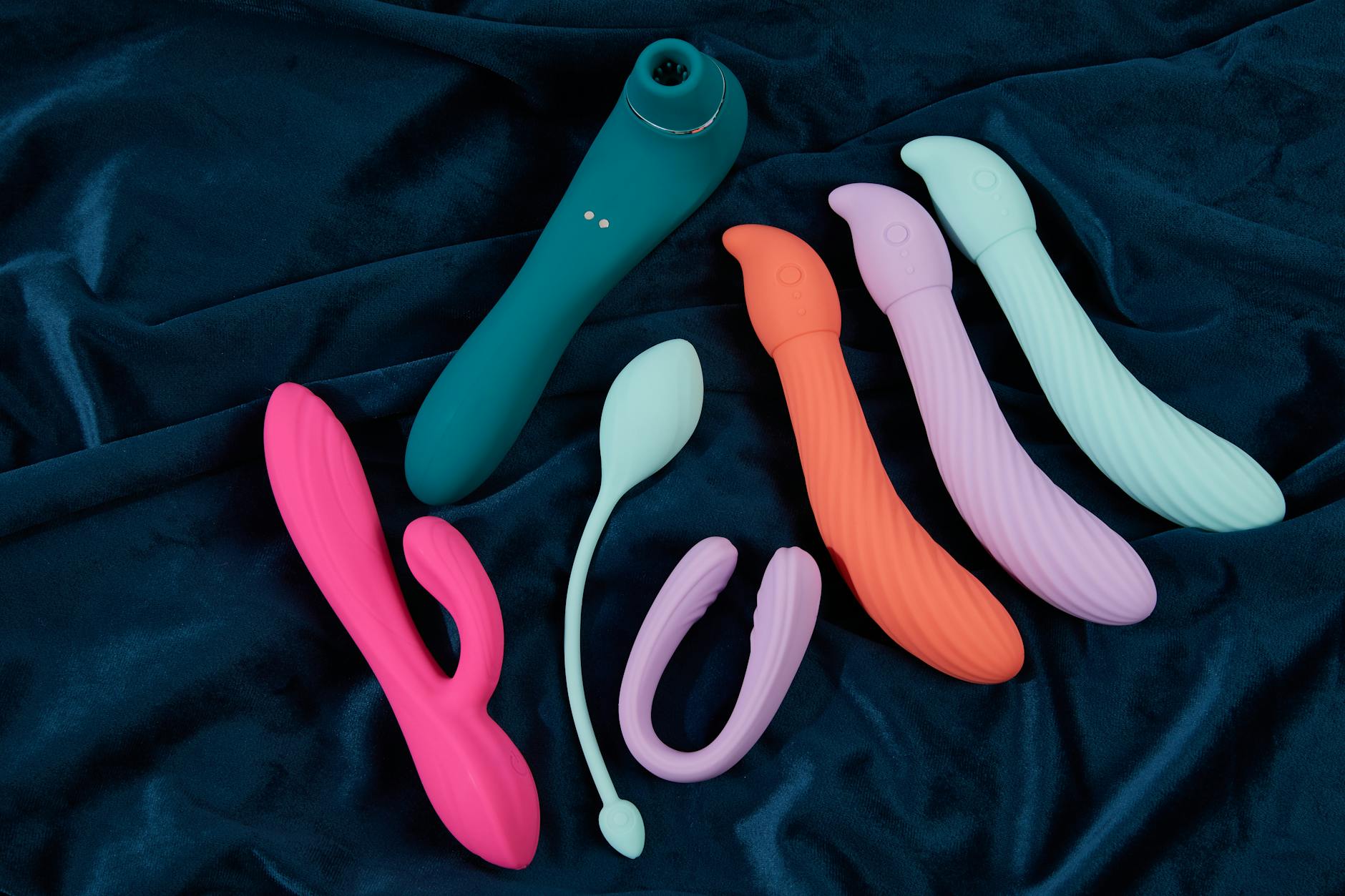
Let's talk about what happens when stimulation stops working
You've been using the same vibrator for years. It used to deliver. Now? You're cranking it to the highest setting and barely feeling a thing. Your clitoris has gone numb. This isn't a personal failure. It's what happens when continuous vibration fatigues the same nerve receptors over and over. Your body adapts, desensitizes, and eventually checks out entirely.
Here's the thing nobody tells you: vibration and suction aren't just different flavors of the same experience. They're activating completely different neural pathways. Understanding that distinction can be the difference between recovering sensation and chasing higher settings forever.
How vibration numbs your nerves
When you use a traditional vibrator, you're applying rapid, repetitive pressure to one spot. Your clitoris has roughly 8,000 nerve endings concentrated in a tiny area. At first, that stimulation fires intensely. The nerves fire, your brain receives the signal, pleasure happens.
But here's where it gets tricky: those nerves don't keep firing at the same intensity indefinitely. Sensory adaptation is a real neurological process. The same constant stimulus becomes background noise. Your nervous system literally stops registering it the way it did at first.
This is why you keep turning the vibration up. You're chasing that initial nerve response, but each increase only masks the problem temporarily. The underlying issue remains: continuous vibration fatigues the sensory receptors faster than they can recover.
Most traditional vibrators operate at 40-100 Hz (cycles per second). That's rapid. Day after day of the same frequency trains your nerves to tune it out.
Why suction recruits different nerve fibers
Suction works through a fundamentally different mechanism. Instead of repetitive pressure, suction creates a gentle vacuum that pulls tissue into the device gently. This engages deeper nerve fibers that vibration barely reaches.
Your clitoris isn't just surface nerves. The tissue extends inward, and deeper structures contain nerve fibers responsible for different sensations. Vibration fires the surface receptors repeatedly until they fatigue. Suction activates those deeper fibers in a rhythm closer to natural arousal patterns.
A lemon clitoral vibrator like the Lem uses suction as its primary mechanism. Instead of buzzing at a fixed frequency, it pulses air around the clitoral head in a wave-like pattern. This mimics the sensation of oral sex more closely than traditional vibration ever could, and crucially, it engages a broader range of nerve populations.
When you rotate between different nerve fiber types, you prevent the fatigue that kills sensation with traditional toys. Your body doesn't adapt to one stimulus. It stays responsive.
The sensory adaptation crisis is real
I talk to people constantly who've hit this wall. They describe it as numbness, deadness, or the sensation "disappearing." Many assume something is medically wrong. Often, the culprit is years of high-frequency vibration training their nervous system to stop responding.
This is especially common if you've been using a powerful lemon adult toy, or even a standard wand vibrator, as your primary device for a long time. The more powerful the vibration, the faster the adaptation typically happens.
Here's what's important: this is reversible. But the fix isn't buying a stronger vibrator. It's switching the type of stimulation entirely.
How to recover sensation with suction-based devices
The first step is taking a break from traditional vibration. I usually recommend two to four weeks off high-frequency toys. During this time, you can explore lower-intensity options, manual stimulation, or other forms of pleasure that don't involve vibration.
After that break, switching to a suction-based clitoral vibrator like the lemon sucker gives your nervous system something genuinely new. Because the stimulus is different, your nerves don't immediately adapt. You'll likely feel dramatically heightened sensation compared to what you were experiencing with your old vibrator.
The pattern variations in lemon sexual toys matter too. If the device offers multiple suction patterns (some offering wave, pulse, or steady modes), rotating between them keeps your nervous system engaged. You're not training it to one stimulus. You're keeping it alert.
Why intensity isn't the answer
This is where a lot of people get stuck. When sensation fades, the instinct is to buy a stronger vibrator. More power. Faster buzz. Higher settings.
But that's treating the symptom, not the problem. If sensory adaptation is your issue, a more intense vibrator will just speed up the adaptation cycle. You'll feel great for a month, then be numb again. And now you're looking for something even stronger.
It's a trap. I've watched people cycle through increasingly extreme toys, each one working for shorter periods, each one causing faster fatigue.
The solution isn't intensity. It's variety and mechanism. Switching to suction, rotating patterns, and occasionally returning to other forms of stimulation keeps your nervous system from habituating to a single input.
Combining suction with other techniques
The most effective long-term approach isn't relying on one toy alone. It's strategic variety.
Here's what I recommend. Use your lemon vibrator as your primary device, rotating between its patterns. Once or twice a week, switch to something completely different: manual stimulation, a partner, or even just exploring sensation without any tool. This prevents your body from adapting to any single mechanism.
If you have a partner, involving them in this rotation helps too. Your body responds differently to touch versus toys. That variation is protective against sensory fatigue.
The key is intentionality. You're not just grabbing whatever feels easiest. You're rotating deliberately to keep your nervous system engaged and responsive.
When to reconsider your entire routine
If numbness has been a problem for a long time, a short break and switching to a lemon clitoral vibrator might not fully solve it. Your nervous system may have adapted so thoroughly that you need a longer reset.
In that case, I recommend a 6-8 week complete break from any vibrational or suction toy. During this time, explore pleasure through other avenues: partner touch, manual stimulation, erotic content, whatever genuinely engages you. This gives your sensory system time to recover baseline responsiveness.
After that extended break, introducing a suction device like the Lem feels revelatory. Many people describe it as the first time they've felt real sensation in years.
The long-term path forward
Once you've recovered sensation, maintaining it requires continued variety. Don't fall back into the pattern of using one device exclusively, even if you love it.
Rotate your lemon vibrator with other methods. Introduce new patterns when you feel adaptation creeping in. If you notice sensation fading again, recognize it early and change something. Take a week off. Switch devices. Involve your partner differently.
Your pleasure isn't meant to be a treadmill where you keep chasing a higher setting forever. It's meant to stay alive, responsive, and capable of genuine sensation. The right approach to toys and stimulation protects that instead of destroying it.
Frequently asked questions
Does suction work the same as vibration on everyone?
Not exactly. People experience suction slightly differently depending on clitoral anatomy and tissue sensitivity. Some find it more intense than vibration immediately. Others prefer to build up to it. The beautiful part is that because suction recruits different nerve fibers than vibration, even people who've become desensitized to traditional vibrators often respond well to suction-based devices like the Lem vibrator.
How long does it take to recover sensation after using a powerful vibrator?
It varies, but usually two to four weeks of reduced vibration use shows noticeable improvement. Full recovery to baseline responsiveness typically takes 6-8 weeks. Some people notice the difference within days of switching to a suction device because they're engaging completely different nerve populations.
Can I use a lemon clitoral vibrator if I have always been sensitive to vibration?
Yes, and it's often ideal for people with high sensitivity. Because suction doesn't rely on high-frequency buzz, many people who find traditional vibrators too intense respond beautifully to air-pulse technology. Start at the lowest suction pattern and increase gradually. You're in control of the intensity in a way traditional vibrators don't always allow.
Is it bad to use the same vibrator every day?
Daily use with the same device, at the same intensity, with the same mechanism is actually where sensory adaptation accelerates fastest. If you're using something daily, rotating patterns (if available), varying intensity, and occasionally switching to manual stimulation or a different method helps prevent numbness. A lemon sexual toy with multiple patterns is better for daily use than a single-speed vibrator for this reason.
Should I take regular breaks from all toys?
Not necessarily breaks from toys entirely, but yes, regular breaks from high-frequency vibration specifically. Even just one day a week exploring pleasure without any vibrator keeps your nervous system responsive. Think of it like your senses need variety the same way your body needs variety in movement and exercise.
What if I've been numb for years and nothing seems to work?
If sensation loss has been persistent despite trying different approaches, it's worth talking to a healthcare provider to rule out underlying issues like hormonal imbalances, medication side effects, or nerve damage. But if you've been relying on high-intensity vibration for years, extended time away from vibration followed by introduction to a completely different mechanism like suction often creates breakthrough results. Give it a real chance: at least 4-6 weeks of consistent attention to changing your approach.
Moving forward with sensation
Your body's capacity for pleasure isn't fixed. Numbness isn't permanent. Sensory adaptation is real, but so is sensory recovery. The path forward isn't chasing higher vibration settings into oblivion. It's understanding how different mechanisms work, rotating intentionally, and sometimes taking a step back.
If traditional vibrators have left you numb, switching to a suction-based lemon vibrator gives your nervous system something entirely new to respond to. Many people rediscover sensation they thought was gone forever.
Ready to explore options? Start with the fundamentals: lower intensity than you think you want, varied patterns, and intentional breaks. Your pleasure is worth protecting. And it's absolutely worth recovering.
Have more questions about restoring sensation after numbing? Get in touch with our team.