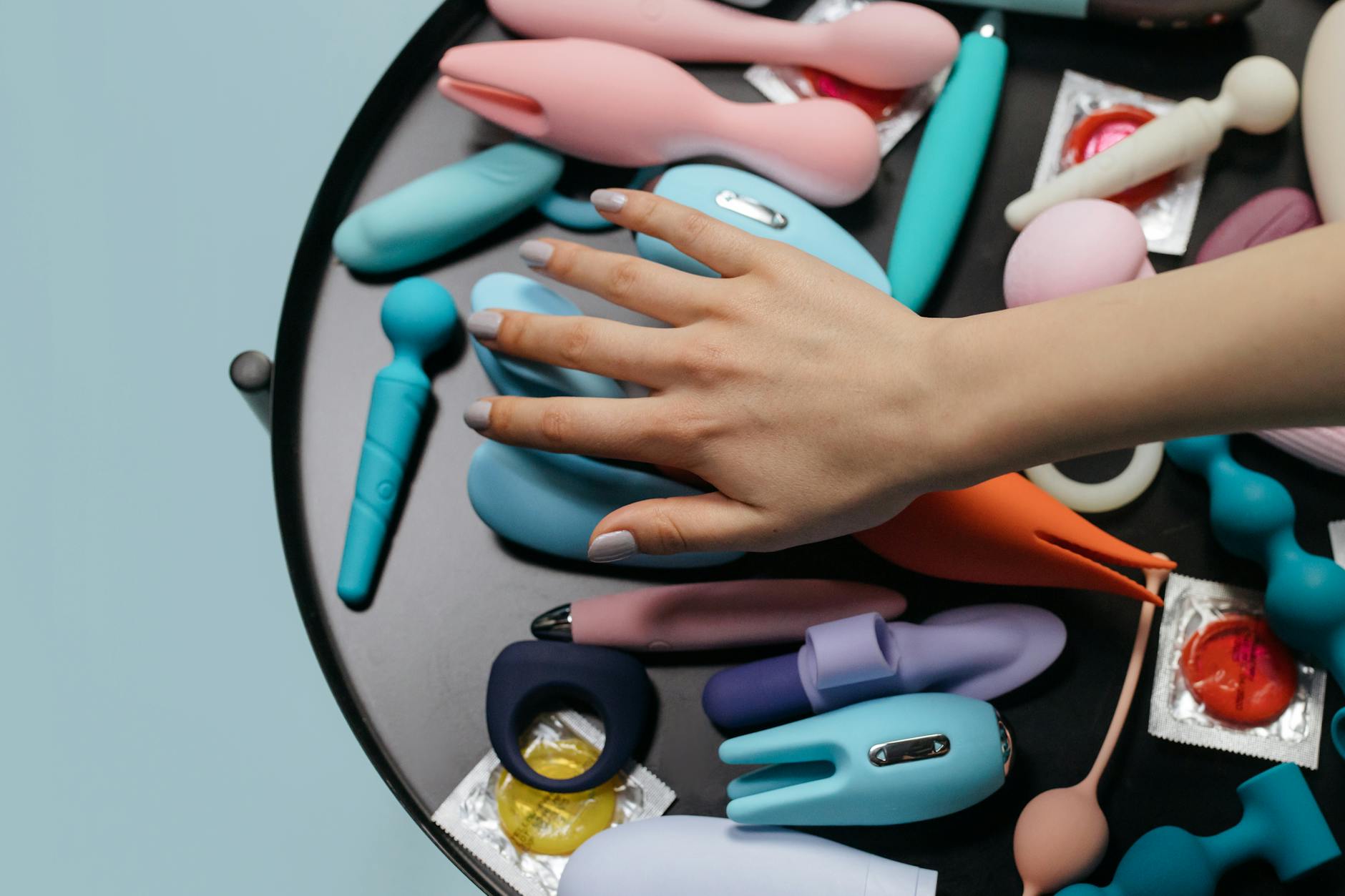
Let's talk about numbness
You touch yourself and feel almost nothing. Or you do feel something, but it's muted, distant, like you're experiencing your own body through a thick window. That's sensation loss. It's common, it's frightening, and it's almost always reversible.
Here's what you need to know first: losing sensation doesn't mean your nerves are broken. It usually means they're fatigued, overstimulated, or starved of the right kind of input. Lemon vibrators work differently than traditional vibrators, which is exactly why they're so effective when sensation has flatlined.
Why sensation goes numb in the first place
There are three main culprits, and they're usually overlapping.
First is habituation. When you use the same toy at the same intensity for months or years, your nervous system stops paying attention. It's the same reason you stop noticing background music or a tight shirt after an hour. Your body gets bored. More stimulation doesn't fix bored nerves; different stimulation does.
Second is physical exhaustion. Using a traditional vibrator at high speeds for long stretches can actually fatigue nerve endings temporarily. The clitoris has about 8,000 nerve endings packed into a space the size of a pea. Hammer them with buzz-vibration for 30 minutes and they need recovery time.
Third is hormonal or psychological overlay. Stress, relationship tension, medications, and hormonal shifts can all dampen sensation from the brain side, even if the nerves themselves are fine. This is crucial because it means sensation loss often needs a multi-angle fix.
How lemon vibrators work differently
Unlike traditional vibrators that work with repetitive buzzing motion, lemon clitoral vibrators use gentle suction combined with pulsing patterns. This is a fundamentally different sensory input.
When you switch from buzz to suction, you're activating different nerve pathways and recruiting different tissue responses. It's like the difference between a constant hum and a series of gentle tugs. Your nervous system registers this as novel stimulation, which is exactly what fatigued nerves need to wake back up.
Lemon vibrators also tend to require less total pressure. Instead of pressing down hard into the tissue to feel the vibration, suction works with the natural anatomy. This means you're not battering already-tired nerve endings; you're coaxing them back to life with gentler, smarter input.
Starting over with sensation recovery
If you're coming off a period of numbness, here's my approach.
First, take a break. Not forever. A week, maybe two. Let your nervous system reset. During this time, notice touch elsewhere. Warm water in the shower. Your partner's hand on your skin. A soft blanket. You're reminding your body what sensation feels like across the board.
When you're ready to introduce a lemon vibrator, start at the lowest setting. I mean the lowest. If your device has five intensity levels, begin at level one and stay there for at least five sessions. Patience here is not weakness; it's precision. Your goal is to feel, not to climax.
Approach the clitoris obliquely at first. Instead of placing the device directly on the hood, try positioning it just beside the clitoral area, or even on the inner labia. Let the sensation diffuse through the tissue rather than concentrating it. This distributes the input across more nerve endings and prevents that overwhelming, numb-making overstimulation.
Building sensation back, layer by layer
Once you're comfortable at level one, spend time just noticing. What does this feel like compared to buzzing? Is it more textured, more rhythmic, more present? Are there particular patterns that feel better than others. Most lemon vibrators have multiple pulsing modes. Some feel scattered; some feel focused. Find the ones that create the sense of a gentle conversation with your body rather than a monologue.
When you're ready to move to level two, stay there for several sessions too. You're not racing toward orgasm; you're training your nervous system to feel again. The pleasure will follow, but the sensation itself is the point.
Many people find that sensation returns unevenly. You might feel a clear tingle on the right side of your clitoris but nothing on the left. That's normal. It's not a problem. It just means those nerve pathways are waking up at different speeds. Keep working with what you feel rather than trying to force uniformity.
Why the suction matters for numb tissue
When sensation is low, tissue often needs to be engaged, not attacked. Suction brings blood flow to the area. It creates a gentle vacuum that awakens tissue in a way that hammering vibration can't. For people recovering from sensation loss, this difference is significant.
The lemon clitoral vibrator's design also means you're using multiple sensory channels at once. You feel the suction, the pulse, the texture. This multi-modal input is exactly what helps dulled nerve endings remember how to fire. A single monotonous buzz just adds to the numbness.
Managing expectations and patience
Sensation doesn't usually come back in one session. You might spend two weeks with minimal progress and then suddenly, mid-session, feel something sharp and clear. Then it goes back to dull. This is normal. Your nervous system is learning a new pattern. It's not linear.
If you're working with a partner, let them know you're in recovery mode. This matters because partners often interpret numbness as disconnection from them, which adds emotional weight to a physical problem. Being clear that you're retraining your body removes that confusion.
If sensation still hasn't returned after four to six weeks of consistent, patient use, check in with a gynecologist. Sometimes numbness signals something like medication side effects or a hormonal issue that needs clinical attention. But in most cases, switching stimulation types and giving your nerves time to reset works beautifully.
The psychological side of sensation loss
Here's something people don't talk about enough: feeling numb in your body is scary. It can trigger anxiety, which makes sensation even harder to access. You start catastrophizing. You wonder if this is permanent. You avoid touching yourself because the disappointment feels worse than doing nothing.
This is where you need to be intentional about breaking the cycle. Using a lemon vibrator isn't just a physical reset; it's also a signal to your brain that you're doing something different, something that might actually work. That shift in approach sometimes shifts the nervous system's response too.
Consider pairing sensation recovery with other reconnection practices. Long baths. Solo time without pressure to perform or climax. How to warm up with a lemon vibrator when arousal takes longer is a related read if you're dealing with slow arousal alongside numbness.
When to reach for your lemon vibrator
The best time for sensation recovery work is when you're already relaxed. Not stressed, not rushed, not performing for anyone else. This is selfish, solo time. Morning, evening, whenever your body naturally feels open.
Many people find that sensation recovery happens faster when paired with a longer warm-up. Spend 15 to 20 minutes just touching yourself, building arousal without any device, before you introduce the lemon vibrator. Your nervous system is primed; the device just amplifies what's already happening.
And because your nerves are still learning, session length matters. Thirty minutes with a lemon vibrator is plenty. More than that starts to trigger habituation again. Short, frequent sessions beat long, occasional ones.
FAQ: Sensation recovery with lemon vibrators
How long does it take for sensation to come back?
It varies widely. Some people feel noticeable change within two weeks. Others need four to six weeks. The timeline depends on how long you've been numb, what caused the numbness, and how consistently you're using the new approach. Patience is genuinely the most important variable here. Pushing harder rarely helps; consistent, gentle use does.
Can I use my old vibrator while I'm recovering?
Not if your goal is to rebuild sensation. Your old vibrator is what fatigued your nerves in the first place. Switching to a lemon vibrator is the whole point. If you go back to the old device, you're restarting the habituation cycle. Save the old vibrator for later, once your sensation is back and you want variety.
What if I'm numb everywhere, not just my clitoris?
That's a different issue and worth discussing with a doctor. Numbness across multiple areas of the body can signal medication side effects, hormonal shifts, nerve conditions, or other health factors that need clinical assessment. Sensation recovery with a toy helps local numbness; it won't address systemic issues.
Does sensation recovery mean I'll have better orgasms?
Often yes. Because sensation is back, and because you've retrained your nervous system to notice subtlety rather than relying on brute force. But the goal here isn't a "better" orgasm; it's reconnection. Whatever pleasure follows is a bonus.
Should I use lube with a lemon vibrator during recovery?
Absolutely. Water-based lube helps the suction work better and makes everything feel more comfortable. It also signals to your body that this is a pleasure activity, which helps calm anxiety. Use as much as feels good.
What if sensation comes back unevenly?
Perfectly normal. One side of your clitoris might wake up before the other. The tip might be responsive while the hood stays quiet. This is just your nervous system waking up in its own order. Keep working with what you feel. Asymmetry usually balances out over time.
Moving forward
Sensation loss is frightening but temporary. Switching from traditional vibrators to lemon clitoral vibrators is often the precise change your nervous system needs to remember how to feel. The key is patience, gentle progression, and giving your body time to learn a new language of pleasure.
If you're stuck or frustrated, reach out. Contact Hello Nancy and let's talk through what you're experiencing. Sometimes a conversation with someone who understands the science behind this stuff makes all the difference.