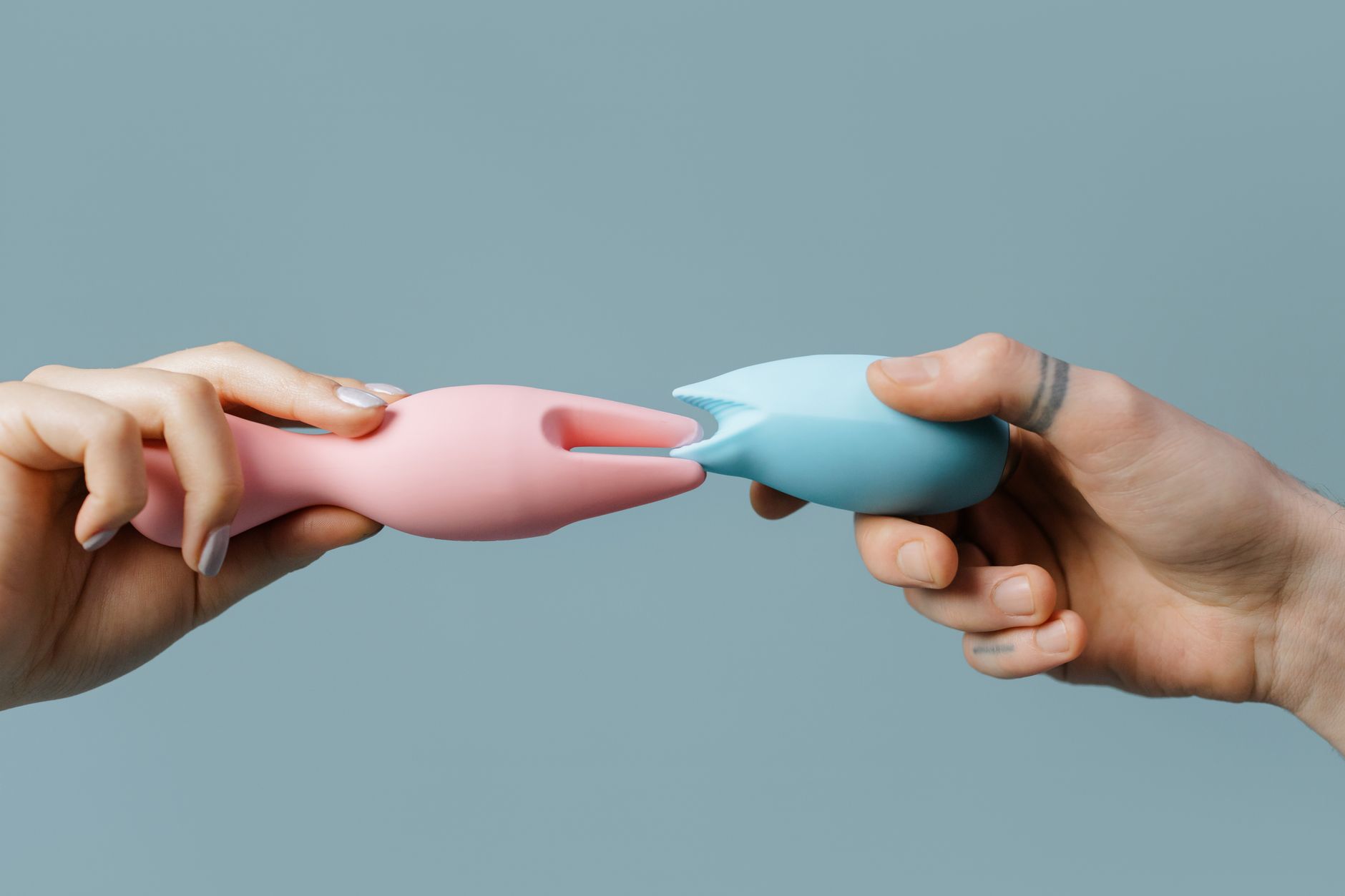
When depression lifts, your body might feel like someone else's
Depression numbs desire. That's not poetic. It's a symptom. Your libido doesn't disappear because you're broken or because you've stopped being a sexual person. It disappears because your brain chemistry has made pleasure biologically unavailable. When antidepressants kick in or therapy starts working, that numbness lifts. And then something unexpected happens: you feel desire again, and it's terrifying, because you barely remember what that feels like.
Your body has changed while you weren't paying attention. Maybe you've gained weight. Maybe you're still carrying the shame from months of not showering. Maybe sex feels like something you should want, and you're checking boxes instead of feeling anything. This is the gap between intellectual readiness and embodied readiness, and it's real.
A lemon vibrator like the Lem can bridge that gap, but only if you use it as a tool for reconnection, not as proof that you're "normal again."
What actually happens in your body during depression
Depression doesn't just make you sad. It makes pleasure neurologically unavailable. The reward pathways in your brain that light up during sex go quiet. Dopamine drops. Arousal takes longer. Orgasms feel distant or impossible. Some people on SSRIs experience delayed orgasm as a side effect, which compounds the problem. You want to want, but your nervous system is offline.
When you get better, this reverses. But it doesn't reverse all at once, and it doesn't reverse equally across your whole body. Your mind might be ready before your genitals are. Your genitals might respond to touch before you trust that you deserve pleasure. These timings rarely sync up, which is why so many people describe returning desire as bewildering rather than joyful.
Honestly? That's the norm. It's also the place where a lemon suction vibrator becomes useful, because it doesn't ask you to feel ready. It just asks you to show up.
The first rule: this is not about performance
When desire comes back, there's often pressure to prove it. Pressure to have sex with a partner. Pressure to orgasm. Pressure to feel like yourself again, which usually means feeling sexually confident, which you don't feel, which means you're failing. This spiral is where people break their own progress.
Instead, treat your first experiences with a lemon clitoral vibrator as research, not performance. You're learning what your body wants now, not trying to match what it wanted before depression. These are different questions.
Set aside 20 minutes when you won't be interrupted. Not when you should be having sex. Not when your partner is expecting something. Just for you. Start with your lemon vibrator on the lowest setting. The Lem works beautifully here because its suction stimulation feels gentler than traditional vibration, especially if your sensitivity has shifted during treatment.
How to start when your body feels unfamiliar
Take a breath and touch your own skin first. Not sexually. Just touch your arm, your thigh, your collarbone. Notice the temperature. The texture. Whether it feels good or numb or strange. This matters because depression can create dissociation, and you might be walking around in your body without actually inhabiting it. Reconnecting starts here.
When you're ready, use your lemon vibrator on the lowest setting. Place it on your inner thigh first, not directly on your clitoris. Let yourself feel the sensation without the pressure to respond. Responses are not the goal. Information is the goal. What does this feel like? Tingly? Numb? Pleasant? All of these are normal.
If numbness shows up, that's not failure. That's your body telling you it needs more time or a different approach. You can use a slightly higher setting, but don't chase sensation. That's a spiral toward performance again. Instead, move the vibrator to different areas: your labia, your inner thigh, the space between your clitoris and your thigh. Sometimes sensation wakes up in unexpected places.
Managing the shame-guilt-pleasure triangle
Many people emerging from depression feel shame about their bodies. You've been neglecting yourself. You haven't had sex in months or years. Your partner might be frustrated or hurt. Your body might not match what you remember. These feelings are real, and trying to feel pleasure on top of them is like trying to light a match in a hurricane.
If shame shows up, pause. Put the vibrator down. Name what you're feeling. "I feel ashamed of my body right now." Not as a reason to stop, but as information. Sometimes shame is protective: it's keeping you from moving too fast. Sometimes it's just old programming from depression. Both need to be acknowledged.
If you have a partner, this is worth saying out loud: "I'm working on reconnecting with my own pleasure. That's separate from us." This matters because your partner might be relieved, or they might feel rejected. Either way, clarity helps. You're not rejecting them. You're rebuilding yourself.
When you use your lemon vibrator during this phase, you're not proving anything to anyone. You're proving something to yourself: that your body still works, that pleasure is available, that you deserve to feel good. That's it.
Why suction vibrators work when traditional vibrators don't
There's a reason I recommend the Lem and other lemon suction toys over traditional vibrators for people returning from depression. Suction stimulation feels less invasive. It builds sensation gradually. It doesn't require the same level of direct physical sensitivity that a traditional vibrator demands.
If you've been numb for months, direct vibration can feel overwhelming. It's like jumping straight to a loud conversation when you've been in silence. Suction is softer. It's a different kind of stimulation. Your clitoris has thousands of nerve endings, and suction wakes them up gently instead of shocking them.
Start on pattern one or two. Stay there for 5-10 minutes. You're not chasing an orgasm. You're waking up your own nervous system. Over time, as sensation returns and you feel more grounded in your body, you can explore higher patterns. But there's no rush.
What to expect (and what not to expect)
You might orgasm. You might not. Both are fine. You might feel sensation that's pleasurable but not arousing. You might feel aroused but unable to orgasm. You might feel nothing for three sessions and then have everything wake up in the fourth. Depression recovery is not linear, and neither is pleasure recovery.
Some people report that their first orgasm after depression is weaker than they remember. Some report it's stronger. Some feel emotional afterward, like they're processing months of numbness in one moment. All of these responses are normal.
If you're on antidepressants and experiencing delayed orgasm, that's a conversation for your doctor, not something you fix by using your lemon vibrator harder. You might need to adjust your medication, or you might need to accept a different timeline for orgasm than you had before. Both are valid paths.
Rebuilding intimacy with a partner
If you're partnered, your own pleasure journey is separate from partnered sex, at least at first. You need to know what your body wants when there's no pressure. Once you have some data about your own preferences and responses, you can slowly bring your partner in.
This doesn't mean jumping straight to partnered sex. It might mean letting your partner see you use your lemon clitoral vibrator. It might mean them touching you while you use it. It might mean many conversations about what you need, what you're scared of, and what pleasure looks like now, not what it looked like before.
Partners often feel hurt or rejected during this phase. They might feel like they're being replaced by a toy. They're not. They're giving you space to rebuild a relationship with yourself, which is the foundation for any relationship with them. That's actually the deepest form of intimacy available.
When to get more support
If you're still not feeling any sensation after three or four sessions, or if you feel pain instead of pleasure, reach out to your doctor or a sex therapist. Sometimes depression recovery stalls in specific areas. Sometimes medication side effects are stronger than expected. Sometimes you need a different tool or a different approach.
Also reach out if shame or guilt becomes overwhelming. That's not a sign that you're doing something wrong. That's a sign that you need more support than a vibrator can provide. A therapist who specializes in trauma, depression, or sexuality can help you untangle what's physiological and what's emotional.
Your pleasure matters. Your body's slow return to sensation matters. The gap between your mind being ready and your body being ready is real and worthy of patience.
People also ask
Is it normal to feel numb with a vibrator after depression?
Yes. Numbness during depression is neurological, and recovery isn't instantaneous. Your brain chemistry is still recalibrating. A lemon suction vibrator like the Lem can help because it provides gentler stimulation than traditional vibrators, but even with the right tool, sensation takes time. If numbness persists after several weeks of use, talk to your doctor about whether your medication needs adjustment.
Can I use a lemon clitoral vibrator if I'm still on antidepressants?
Absolutely. Many antidepressants cause delayed orgasm or reduced sensation as a side effect, but that doesn't mean pleasure is off-limits. A lemon vibrator can help you explore sensation despite medication effects. Some people find that lower vibration patterns or suction toys like the Lem work better than traditional vibrators when they're on SSRIs. If side effects are severe, your doctor might suggest switching medications or adjusting timing, but using a vibrator is safe and often helpful during this process.
How often should I use my lemon vibrator when returning to pleasure?
Start with once or twice a week, just to learn about your own response. There's no requirement to use it daily or to build toward a specific goal. This is exploration, not a training program. As your body responds and you feel more comfortable, frequency naturally increases. Some people find daily use helpful. Others prefer every few days. Your body will tell you what it needs.
What if my partner wants sex but I'm not ready?
Tell them that directly. "I'm working on reconnecting with my own pleasure. I'm not ready for partnered sex yet." If your partner pressures you or makes you feel guilty, that's a separate issue worth addressing, possibly with a couples therapist. Your readiness timeline matters. A partner who respects that is showing you they care about your healing, not just about sex.
Can a lemon vibrator help with antidepressant-induced sexual side effects?
Yes, but it works differently. If your medication is causing delayed orgasm or reduced sensation, a lemon clitoral vibrator can provide more direct stimulation than manual touch, which sometimes helps. Suction vibrators are often gentler and more effective for people on SSRIs. That said, medication-related side effects sometimes require a medication adjustment. Talk to your prescriber about whether changing your dose, timing, or medication might help, while also exploring what works with tools like a lemon sucker toy.
Is it okay to prioritize my own pleasure with a vibrator over partnered sex?
Not only is it okay, it's essential. Your own body, your own pleasure, your own comfort is the foundation. Without that, partnered sex becomes something you're performing rather than something you're enjoying. Use your lemon vibrator as much as you need. Rebuild your relationship with your own body first. Your partner can wait. If they can't, that's information about your relationship that's worth examining.
The return of desire after depression isn't a switch flipping on. It's a slow dimmer that gets brighter over time. Some days it's brighter than others. A lemon vibrator is a tool for that journey, not the destination itself. Your body will find its way back to pleasure. Your job is to be patient with the pace and kind to yourself while you wait.
If you're ready to explore, Hello Nancy's lemon clitoral vibrator options give you different intensity levels and approaches. Start where you are. Your future pleasure will thank you.