Let's talk about what nobody tells you
Postpartum recovery isn't just about bleeding stopping or incisions healing. It's about your nervous system recalibrating, your pelvic floor rebuilding itself, and your brain processing the fact that your body just did something extraordinary. Pleasure gets buried under exhaustion, hormonal shifts, and the sheer logistical chaos of a new human in your life. When you do have a moment to think about sex again, it often feels like a stranger.
Here's the thing: it doesn't have to feel that way. And lemon clitoral vibrators, specifically, are genuinely helpful tools for getting your body back online.
What actually happens to your body after birth
Whether you delivered vaginally or had a cesarean, your pelvic floor is in a state of significant change. Vaginal delivery stretches and sometimes tears the tissue. Cesarean avoids that particular trauma but leaves you with an abdominal incision, altered nerve signaling, and the same pelvic floor strain from nine months of pregnancy weight. Both routes leave your pelvic floor weaker, your nerve endings temporarily desensitized, and your hormones in free fall.
The clitoris doesn't disappear. But the pathway to arousal does get disrupted. Blood flow changes. Sensation dulls. Orgasms, if you can access them, might feel shallower or take twice as long to build. Your brain is also still in survival mode, releasing cortisol and breastfeeding hormones that actively suppress arousal.
This is completely normal. It's also completely reversible.
Why lemon vibrators work better for postpartum bodies
Traditional vibrators use direct vibration, which requires your pelvic floor and clitoris to be already partially engaged to feel good. Postpartum, your pelvic floor is fatigued and your sensitivity is compromised. Traditional vibration can feel overwhelming, dull, or even slightly painful.
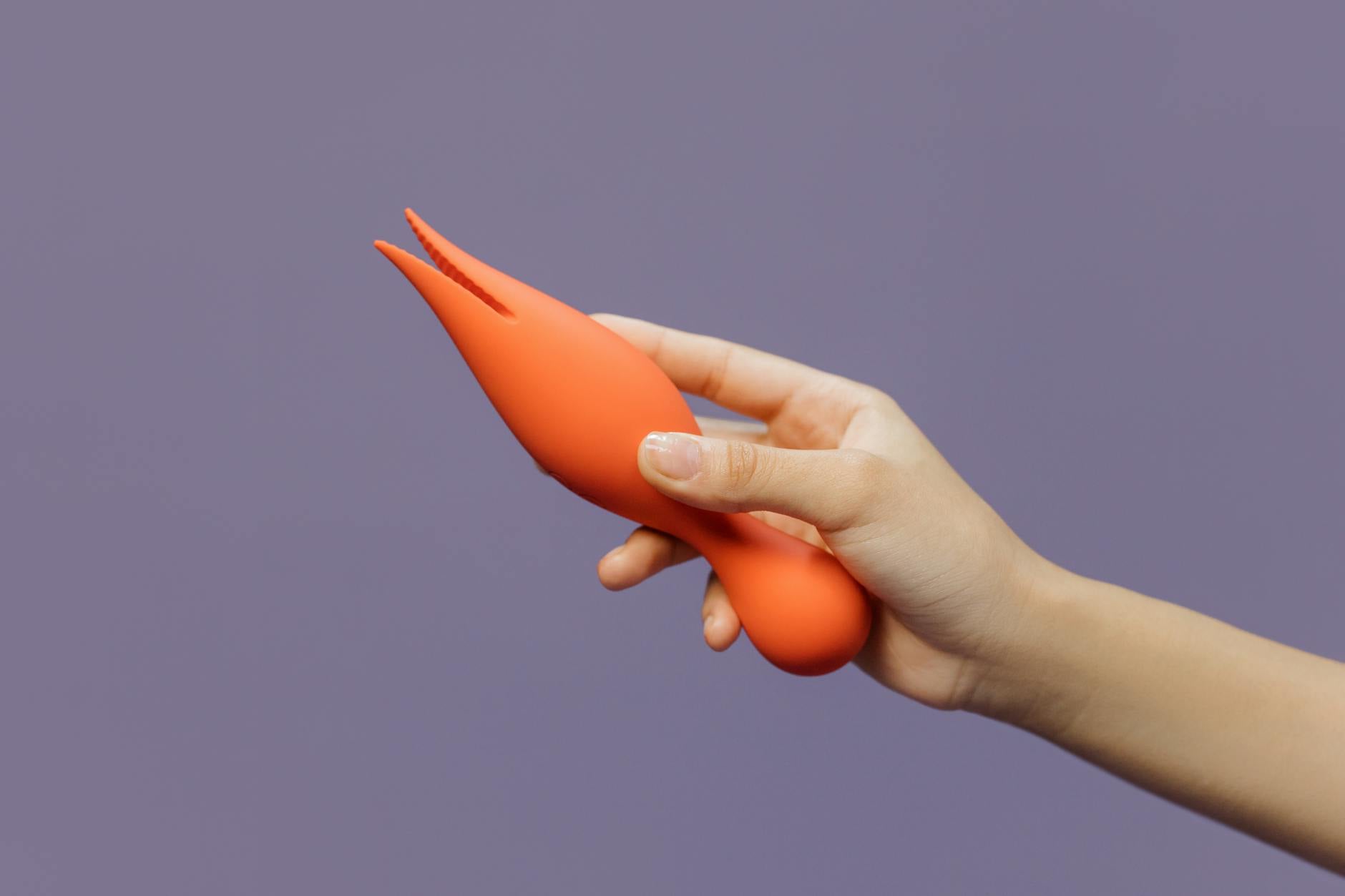
Lemon suction vibrators work differently. Instead of hammering a single frequency into numb tissue, they use gentle air-pulse suction to stimulate the clitoris and surrounding nerve clusters. This approach has three major advantages for postpartum recovery:
1. Minimal pressure. Your tissue is tender. Suction creates stimulation without the relentless friction of a traditional vibrator. You can use it at pattern 1 or 2 and still feel something real.
2. Faster arousal activation. The suction pattern mimics the kind of stimulation that naturally triggers blood flow to the clitoris. This accelerates arousal in a body that's running on fumes and distraction. You need results in 10-15 minutes, not 30.
3. Gentler on healing tissue. If you had a vaginal tear or episiotomy, or if your cesarean scar is still tender, a lemon clitoral vibrator lets you focus on external stimulation without worrying about internal pressure or stretch.
The timeline for reintroducing pleasure
Most OB/GYN guidance says wait six weeks before penetrative sex. That doesn't mean you should wait six weeks before touching your own body or exploring pleasure solo. In fact, it's the opposite.
Week 2-3 postpartum: Start gentle pelvic floor awareness. This isn't pleasure yet. It's just noticing. Lie down, breathe into your pelvic floor, feel it relax and engage. No vibrator. Just reconnection.
Week 4-6: If bleeding has significantly decreased and you feel physically ready, try external-only stimulation with a lemon vibrator on the lowest setting. Keep it brief. 5-10 minutes. The goal isn't orgasm yet. It's sensation. Start remembering what pleasure feels like.
Week 6+: Once you've got medical clearance and you've been practicing with the vibrator on lower settings, increase intensity gradually. You might finally orgasm in week 7 or 8. That's not unusual. That's healing.
How to actually use a lemon vibrator during postpartum recovery
First, clarity: the Lem and other lemon clitoral vibrators are 100% external. They're not going inside. They sit against your vulva, stimulating the clitoris and the labia through gentle suction. This matters because it means you can use it safely even if your pelvic floor is compromised or your vaginal opening is tender.
Start with moisture. A tiny amount of water-based lubricant helps the lemon vibrator seal properly and makes the sensation less intense. You're not adding stimulation. You're reducing friction. This is different from the lubrication you'd use with a partner during penetration.
Keep initial sessions short. Postpartum, your nervous system is primed to react. Even 5 minutes of stimulation can feel significant. Build up to 10-15 minutes as your body adjusts.
Use the lowest settings first. The Lem has 10 intensity patterns. Start at 1 or 2. If you can't feel anything after a full minute, move to 3. But you'll probably feel something at 1. Postpartum sensitivity is heightened in some ways and dulled in others. Low intensity usually works.
Focus on arousal, not outcomes. In the first month or two of postpartum pleasure recovery, the goal is not orgasm. It's remembering sensation. It's rebuilding the neural pathway between your brain and your body. If you orgasm, great. If you just feel something and that's enough, that's also great.
The emotional piece people skip
Physically, a lemon vibrator helps. Emotionally, you also have to reckon with the fact that your body has changed and you're in a radically different life circumstance. Many postpartum people report that they feel disconnected from their own sexuality because they're touched out. Your baby has been on you constantly. The idea of more touch feels depleting.
This is real, and it's separate from the physical recovery. A vibrator can't solve "I don't want to be touched right now." But it can help bridge the gap between "my body isn't mine" and "I'm rediscovering what feels good."
Talk to your partner, if you have one, about this distinction. "I'm relearning my body with this tool" is a different conversation than "I'm ready for sex again." Confusing them creates resentment and false timelines. Separate them and you actually move forward.
When to pause and ask for help
If you have sharp pain, burning sensation, or increased bleeding when you use a lemon vibrator, stop and check in with your OB/GYN or midwife. This could mean you're not as healed as you thought, or it could be a sign of pelvic floor tension that needs physical therapy.
Pelvic floor physical therapy is genuinely life-changing for postpartum people. A PT can teach you how to relax your pelvic floor, which many postpartum people can't do on their own because they're clenching unconsciously. This tension makes pleasure harder and recovery slower. If orgasms stay inaccessible after 3-4 months, talk to a pelvic floor therapist.
If depression, anxiety, or significant emotional numbness is blocking your interest in pleasure entirely, that's not a vibrator problem. That's a postpartum mental health concern that deserves professional support. A lemon clitoral vibrator can complement that work, but it's not the fix.
FAQ: Postpartum pleasure and lemon vibrators
Is it safe to use a vibrator if I had a vaginal tear?
Yes, as long as the tear has healed and you've gotten medical clearance. Keep it external only, use the lowest setting, and stop if there's any sharp pain. A lemon vibrator is lower-pressure than a traditional one, which is why it's often easier on tender tissue.
What if I had a cesarean section? Can I still use a lemon vibrator?
Completely. Cesarean births don't affect your ability to use external vibrators. The abdominal incision means you should avoid pressure on your belly, but a lemon vibrator sits against your vulva. Give yourself time for the incision to heal and the surgical shock to wear off, but after 4-6 weeks, it's fair game.
How long after birth before I can feel pleasure again?
This varies wildly. Some people feel something again by week 8. Others take 4-6 months. Hormones, sleep deprivation, stress, and how you delivered all affect the timeline. A lemon vibrator can help speed up that reconnection because it requires less pelvic floor engagement than traditional vibrators.
Will using a vibrator affect breastfeeding?
No. Pleasure and sexual response don't interfere with milk production. They might temporarily increase oxytocin, which actually supports milk letdown. The only complication is logistics: if you're breastfeeding constantly, finding time alone is the real challenge.
What if I don't feel anything the first time I use it?
Postpartum numbness is real. Your nerves are literally recalibrating. Try again in a week, on a slightly higher setting. If you still feel nothing after a few attempts over 2-3 weeks, talk to your OB/GYN. There are medical reasons this might happen (hormone levels, nerve damage, depression), and they're all addressable.
Can my partner use a lemon vibrator on me before I'm ready for penetrative sex?
Absolutely. In fact, this can be a great bridge during postpartum recovery. It lets your partner participate in pleasure without pressure for penetration. Just make sure you're setting boundaries clearly: "This is the only touch I have energy for right now, and that's okay."
You're not broken, you're rebuilding
Postpartum bodies are not supposed to feel the same immediately. Your hormones are in chaos. Your sleep is destroyed. Your pelvic floor is reorganizing itself. The fact that pleasure feels distant or altered is not a sign of permanent damage. It's a sign that your body is working through one of the most significant physical transformations it will ever experience.
A lemon clitoral vibrator won't magically restore sensation overnight. But it gives your nervous system something concrete to focus on, something that meets you where you actually are rather than where you're supposed to be. It's a tool for reconnection. And reconnection, even 10 minutes at a time, is how you get your body and your pleasure back.
If you're struggling with postpartum recovery of any kind, sexual or otherwise, please reach out to a healthcare provider or specialist. And if you're ready to explore lemon vibrators as part of that recovery, start low, be patient with your body, and trust that sensation comes back when your nervous system feels safe enough to allow it.
References
American College of Obstetricians and Gynecologists. (2023). Postpartum Care. Clinical Practice Guidelines.
Birthrights. (2023). Understanding Pelvic Floor Recovery After Childbirth. Evidence Summary.
Cunningham, F. G., et al. (2022). Williams Obstetrics (26th ed.). McGraw-Hill Professional.
Dean, N., et al. (2020). Pelvic floor physical therapy for postpartum sexual dysfunction. Journal of Sexual Medicine, 17(3), 445-452.
Dunn, K. M., et al. (2023). Sexual dysfunction and recovery in the postpartum period. Obstetrics & Gynecology, 141(2), 234-241.