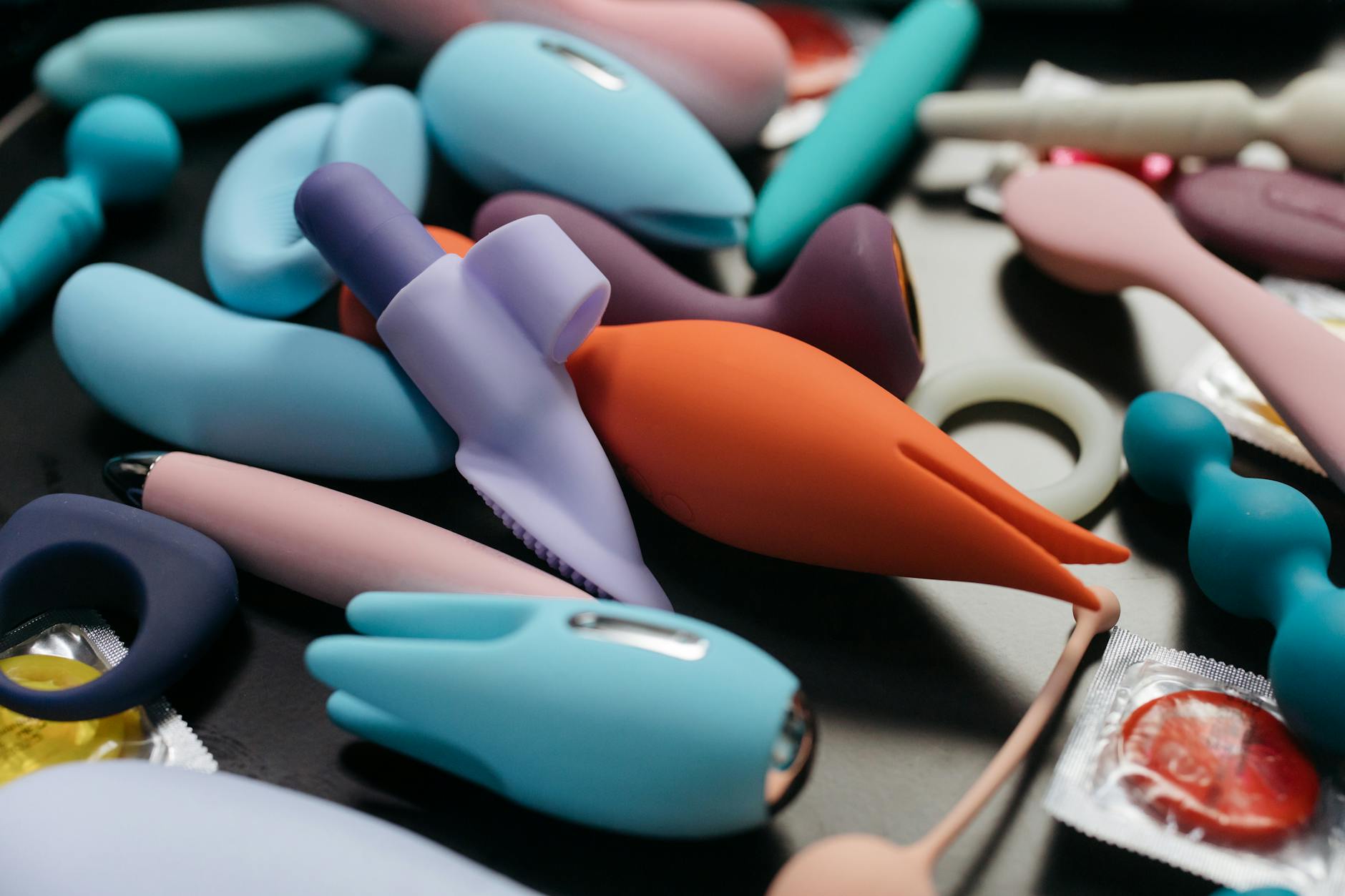
Let's start with the uncomfortable truth
Orgasm used to come in ten minutes. Now it takes thirty, or forty, or feels like it might not show up at all. You're not broken. You're not getting old (or at least, that's not the only reason). What's happened is that your nervous system's highway has gotten a bit longer.
Delayed orgasm is one of the most common shifts people experience, and it's also one of the least discussed. It shows up in your thirties, your forties, your fifties, or seemingly out of nowhere. And because no one talks about it plainly, most people assume they've lost something permanent. They haven't.
What's actually changing in your body
Two main neurological things happen as we age. First, the neural pathways that signal arousal slow down slightly. This isn't deterioration. It's like your brain's sensory processing has gotten more selective. It takes more targeted input to fire the same neurons. Second, blood flow to the genitals responds differently. Arousal used to be automatic. Now it requires intention.
Here's what doesn't change: your capacity for orgasm. Your orgasm hardware is still there. The neural density in the clitoris doesn't vanish. But the route to get there has shifted.
If you're on medication (antidepressants, blood pressure meds, antihistamines), that's a separate variable layering on top of the aging piece. Medications don't eliminate orgasm, but they can lengthen the path to reach it by making the nervous system less responsive to stimulus.
Why the old techniques stop working as fast
That vibrator you loved at twenty-five probably still works. But the problem is speed and surface area. Most traditional vibrators send high-frequency buzz straight into the tissue. When your nervous system is responding more slowly, that surface-level vibration doesn't penetrate deep enough into the nerve clusters fast enough.
A lemon suction vibrator (like the Lem) works differently. Instead of vibration alone, it uses rhythmic suction that creates a pull and release sensation. Suction stimulates the entire clitoral complex, including the internal parts that wrap around the vaginal canal. This means the signal reaching your brain is richer, more complex, and hits more nerve endings at once. The path to orgasm gets shorter because you're sending a stronger, fuller message.
Think of it this way: traditional vibration is like knocking on a door. Suction is like knocking and calling out and shaking the handle all at once. When your nervous system is processing input more slowly, you need more of a signal to register.
How to use a lemon clitoral vibrator when orgasm takes longer
Start with pattern exploration, not speed
With delayed orgasm, the instinct is to crank the intensity up immediately. Don't. The Lem has multiple patterns, and your job is to find which one your nervous system responds to fastest. Spend a few sessions (yes, sessions, plural) just testing patterns one through five. Notice which one creates that first spark of intensification in your clitoris.
Often, people with delayed orgasm respond best to intermediate patterns, not the highest intensity. The pattern creates rhythm your nervous system can predict and build on, whereas maximum intensity can feel chaotic and actually slow down arousal. Your brain needs a signal it can lock onto.
Budget twenty to thirty minutes, minimum
This is non-negotiable. If you're setting aside five or ten minutes, you're setting yourself up to feel like it's not working. Your nervous system needs time to warm up. The first ten to fifteen minutes are often what I call the "threshold phase." Nothing feels like much is happening. Then the neural pathways activate and the intensity builds.
If you stop at minute eight because nothing's happening yet, you never get to the phase where everything clicks. Make the time intentional. Put your phone away. Tell your partner you need thirty minutes of privacy.
Build arousal before you introduce the toy
Your clitoris doesn't wake up the moment you power on the vibrator anymore. It needs a warmup. Spend five to ten minutes on foreplay, fantasy, or whatever gets your body engaged. Stroke your skin. Let your mind wander. Let your breathing deepen. Then introduce the lemon suction vibrator.
This front-loading of arousal is what bridges the slower neural pathway. You're building momentum before you add the external stimulus.
Lower the intensity at first, then build
Pattern one or two on the Lem might feel subtle. That's intentional. A lemon clitoral vibrator works best when you start soft and let sensation build. The suction creates a rolling sensation that intensifies naturally. If you start at maximum, you can numb the tissue and actually make it harder to reach orgasm.
Start at pattern two. Feel it for two to three minutes. Then move to pattern three. Give each one space to register. Your nervous system will signal when it's ready for more intensity.
Pay attention to positioning
When orgasm takes longer, positioning matters more than it used to. You need the lemon suction toy positioned so it's covering the entire clitoral head, not just the tip. Slight movements matter. Find the angle where sensation feels most concentrated, and stay there. Don't chase sensation. Let sensation come to you.
If you're using the toy during partnered sex, communicate about this. Your partner needs to understand that you're not looking for speed, you're looking for the right angle and rhythm.
The role of mental focus
Here's the part nobody tells you: when orgasm takes longer, your brain has to do more work. Distraction kills the experience faster now. You can't scroll your phone or let your mind drift to your to-do list for thirty minutes and expect orgasm to show up.
This isn't a weakness. It's actually an advantage if you reframe it. It means you have to be present. Your pleasure has become a practice that requires attention. That presence often makes the orgasm, when it arrives, more intense than the quick ones used to be.
Try this: focus on breath and sensation, not on achieving orgasm. The achievement mindset actually slows things down. Instead, notice the sensations the lemon clitoral vibrator is creating. Notice your breathing. Notice when your body tightens. Orgasm often arrives when you stop trying to make it happen.
When to check with a doctor
Delayed orgasm is normal. Absent orgasm for months, or pain during the attempt, is not. If you're not reaching orgasm even with the right tool and plenty of time, talk to your GP or gynecologist. Sometimes delayed orgasm is medication-related and fixable with a dose adjustment or a different drug. Sometimes it's hormonal, sometimes it's vascular. The point is: a professional can run simple tests and often solve this in weeks.
The hidden advantage of taking longer
I want to name something I've noticed in my practice: people who initially resisted longer orgasm timelines often tell me six months in that they prefer it now. The reason? When you slow down, you stay in your body longer. You feel more. The arousal plateau lasts longer, which means the orgasm, when it arrives, has been building for twenty or thirty minutes instead of ten. The sensation is often deeper, more complex, and more satisfying.
Your lemon vibrator isn't a tool to rush. It's a tool to help you access pleasure that was always there, just on a different timeline now.
FAQ
How long should it take to orgasm with a lemon vibrator if I have delayed orgasm?
There's no single timeline. Some people reach orgasm in fifteen minutes with a lemon clitoral vibrator, others take thirty-five. The variable isn't the toy, it's your individual nervous system. What matters is that you're not comparing yourself to your past self. If you used to climax in ten minutes and now it's twenty-five, that's not failure. That's a normal shift.
Can antidepressants make it harder to orgasm even with a lemon suction toy?
Yes, absolutely. SSRIs and some other psychiatric medications can delay orgasm or make it harder to reach. A lemon clitoral vibrator often helps because the suction and pattern options give your nervous system more to work with than traditional vibration. But if the medication is significantly affecting your pleasure, talk to your prescriber. Sometimes a different med or a lower dose fixes it. Never stop medication without guidance, but definitely raise this conversation.
Should I use lubricant with a lemon clitoral vibrator if orgasm takes longer?
Yes, always. Lubrication reduces friction and helps the suction work more effectively. It also signals to your nervous system that pleasure is happening, which can actually speed up arousal. Use a water-based lube. Reapply every ten minutes if you're going longer than fifteen or twenty.
What if my partner wants to help, but I still can't orgasm fast enough?
First, reframe "fast enough." There's no finish line here. Second, tell your partner exactly what you need. "I need you to slow down," "I need us to focus on foreplay for longer," "I need to use my lemon vibrator while you're inside me," whatever it is. The conversation is the tool. Delayed orgasm often improves when partners understand it's not about them or their technique. It's about your nervous system's timeline.
Is delayed orgasm permanent once it starts?
No. It shifts. Some people find that after a few months of using the right tool and setting aside real time for pleasure, the timeline speeds up again. Others stay on a longer timeline and prefer it. The point is: it's not fixed. What works now might change in a year.
Can a lemon vibrator actually help me orgasm faster than I do without it?
Yes, for most people. The suction mechanism and pattern options in a lemon clitoral vibrator engage more of your clitoral complex than traditional vibration does. This means the signal to your brain is stronger, which often shortens the path to orgasm. That said, the most powerful variable is still intention and time. The toy helps, but you have to show up for it.
You're not losing pleasure, you're just accessing it differently
Delayed orgasm feels like a loss until you understand what's actually happening. Your nervous system hasn't deteriorated. It's become more selective. And when you meet it where it is, with patience and the right tool, pleasure often gets richer, not poorer.
A lemon clitoral vibrator is designed for exactly this shift. If you're curious about what that feels like, try one. And if you have questions about whether this is the right next step for your body, reach out. That's what we're here for.