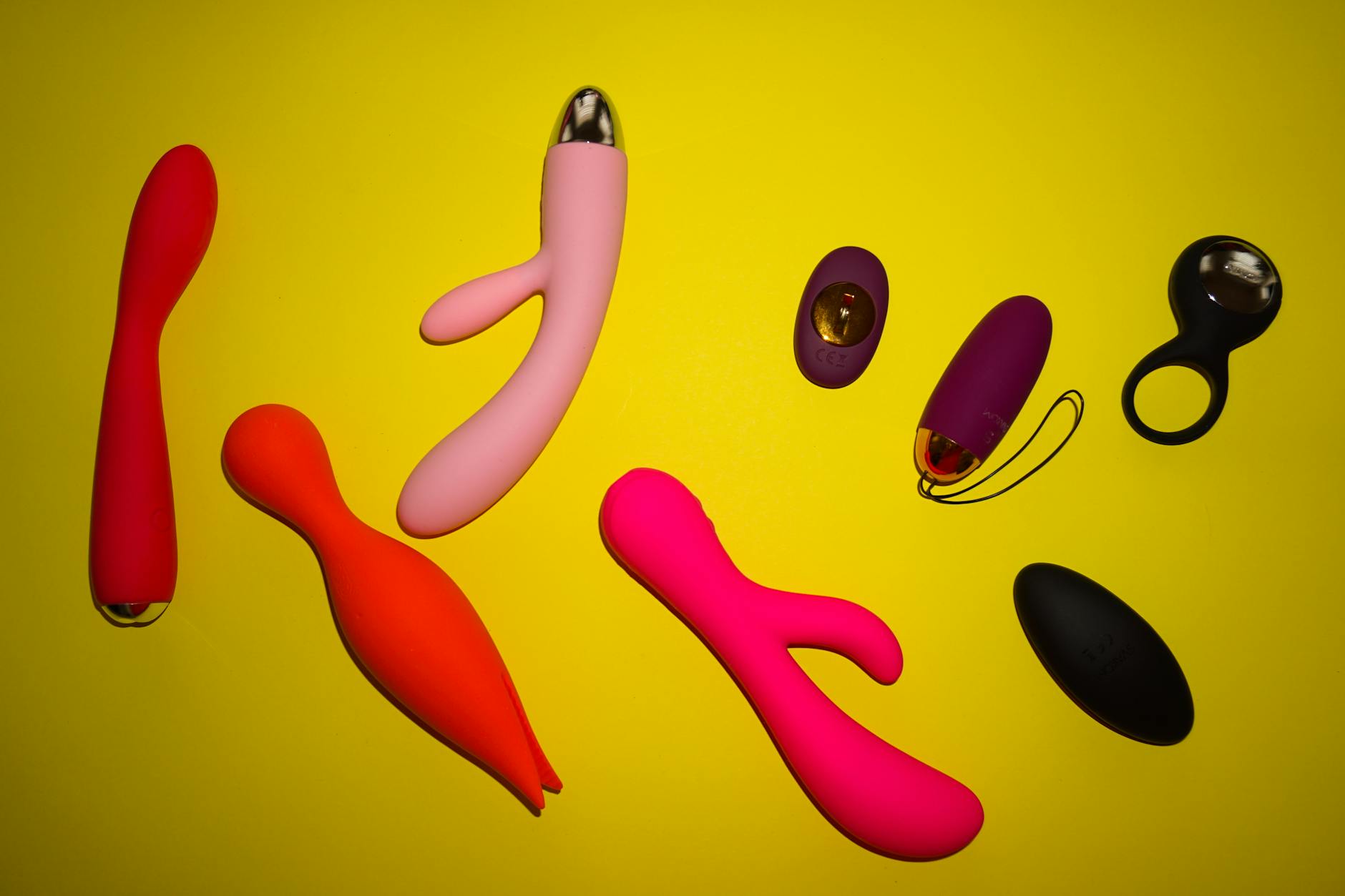
The conversation nobody has with their psychiatrist
You started antidepressants, and they worked. The fog lifted, the panic stopped, you could actually breathe again. Then about three weeks in, you noticed your body had gone quiet. Orgasms feel like they're happening behind thick glass. Arousal takes forever, or doesn't show up at all. You feel like yourself mentally but like nobody physically.
This is real. And it happens to somewhere between 40-60% of people on SSRIs. Most doctors will mention it as a "possible side effect" and then move on. Very few will tell you what's actually happening in your brain, or what you can do about it beyond "maybe try a different medication" or "just give it time."
Let me be direct: you don't have to choose between mental health and physical pleasure. But you do have to understand the mechanism first.
What antidepressants actually do to sensation
SSRIs work by increasing available serotonin in your brain. That's the mechanism that lifts depression. But serotonin is also a key player in the sexual response cycle. Specifically, it dampens dopamine and norepinephrine, which are the neurotransmitters that drive desire and arousal.
Think of it like this: serotonin is the brake pedal on excitement. When you're depressed, your brain needs that brake eased up. When you're on an SSRI, that brake is pressed firmly. Your mood stabilizes, but your body's ability to build sexual energy gets flattened in the process.
This isn't psychological. It's not about your relationship or your self-image. Your clitoris has fewer serotonin receptors than your brain does, but it absolutely has them. The medication reaches tissue all over your body, including genital tissue. What you're experiencing is biochemical, not emotional.
The second layer is that many SSRIs also slightly increase prolactin levels. Prolactin is the hormone that makes you feel satisfied and calm after sex. On medication, that baseline calm gets higher, which means you need more stimulation to override it and reach orgasm.
Why a lemon vibrator changes the equation
Here's where this gets practical. A lemon clitoral vibrator works through suction and gentle pulsing, not direct vibration. That matters a lot when your nervous system is already suppressed.
Traditional vibrators demand a certain level of baseline sensation to register. If your clitoris is already muted by medication, you need a lot of vibration intensity to feel anything. That leads to numbness, frustration, and often giving up.
Lemon vibrators use air-pulse technology that stimulates nerve endings differently. Instead of deadening sensation through repetitive vibration, suction creates a gentle vacuum that engages thousands of nerve endings at once. For people on antidepressants, this is often the difference between "I can't feel anything" and "oh, there it is."
The Lem, specifically, was designed with this exact problem in mind. Low-intensity suction patterns let you feel arousal building at a much lower threshold. You don't have to chase sensation. You can actually follow it.
The actual protocol that works
Using a lemon clitoral vibrator when you're on SSRIs is not the same as using one when your nervous system is running at baseline. You need to adjust three things.
Start lower than you think. Pattern 1 or 2 on the Lem is where most people on antidepressants should begin. Spend 15-20 minutes here, even if it feels subtle. Your goal in week one is not orgasm. It's sensation mapping. You're relearning what pleasure feels like when it's being muted.
Use longer warm-up time. Plan for 30-45 minutes total, not 15. Your body is literally taking longer to activate the neurotransmitters that drive arousal. This is not a flaw. It's just the new timeline. Some of my clients find that extending warm-up actually leads to more intense orgasms because patience lets the pleasure build more steadily.
Layer in other stimulation. If you're using a lemon sucker alone, you might feel like something's missing. Add touch to other parts of your body. Nipple attention, inner thigh stroking, neck. These activate different nerve pathways and can bypass some of the SSRI dampening. You're essentially creating more signals your nervous system can't ignore.
The reason this matters: antidepressants suppress pleasure across the board, but they suppress it unevenly. Your clitoris might feel numb while your nipples still have good sensation, or vice versa. A lemon vibrator is a precision tool, but precision works better when you're also paying attention to the whole landscape.
Timing, medication windows, and what really helps
Some people notice that pleasure sensitivity varies depending on when they take their medication. If you take your SSRI in the morning, you might have a slight window of better sensation in the evening before it's fully active. This isn't a reason to skip doses or mess with timing. But it's useful data. Some clients find that intentionally exploring pleasure during that window gives them real feedback about what's possible.
There's also the "breakthrough" effect that happens around week 6-8 for some people. Your body adjusts to the medication. The nervous system stops fighting it quite so hard. Sensation sometimes improves slightly. If you're going to experiment with a lemon vibrator, give yourself at least that window before you assume nothing will work.
One more piece: if you're also on other medications like birth control or additional psychiatric medications, those layer on. I had a client on an SSRI plus a dopamine agonist who noticed her sensation came back surprisingly fast. Another client on an SSRI plus metformin found she needed even longer warm-up than predicted. Your body is unique. You're the expert on it.
When to talk to your doctor (and what to ask)
If sensation dulling is severe and hasn't improved after 8-10 weeks, it's worth a conversation. You have options. Some doctors will switch you to a different SSRI like sertraline, which has lower sexual side effects for some people. Others might add bupropion, which actually increases dopamine and can counteract sexual side effects. Some will suggest dose adjustment.
None of these conversations should feel shameful. Your doctor has had this talk hundreds of times. Sexual function is part of quality of life. If your medication is working for depression but destroying pleasure, that's a legitimate clinical problem to solve together.
Don't lead with "my toy isn't working." Lead with "my sensation has flattened significantly." That's the medical fact. The lemon vibrator is just your tool for rebuilding it.
The bridge between medication and sensation
Using a lemon clitoral vibrator when antidepressants are dulling sensation is not a workaround. It's a legitimate recovery tool. You're not trying to brute-force pleasure out of a numb body. You're using precision stimulation to help your nervous system remember how to respond.
The first orgasm on SSRIs plus a lemon vibrator often feels different than what you remember. Quieter, maybe. Less explosive. But here's the thing that surprised most of my clients: quieter sometimes means deeper. When you can finally feel something, even if it's subtle, it registers as profound. Your nervous system is working hard to find sensation. When it does, it pays attention.
Your medication is not your enemy. Neither is your body. You're just working with a different operating system for a while. A lemon vibrator is specifically designed for exactly this kind of precision work. Use it with patience, consistency, and the understanding that you're rebuilding sensation, not chasing the old version.
People also ask
Can I take anything else to help with SSRI sexual side effects besides changing medication?
A few things have evidence. Maca root has weak but real data for improving sexual function in some people. Ginseng similarly shows up in studies. The most reliable approach is the one I mentioned: dose timing awareness, longer warm-up, and using tools like a lemon vibrator that work with your body's current capacity instead of against it. Some people also find that intentional exercise, especially cardio, improves sensation because it increases blood flow and dopamine. But talk to your doctor before adding supplements.
Will my sensation come back if I stop the medication?
Yes, usually quickly. Within days to weeks for most people. But that's not a realistic solution if the medication is actually helping your mental health. The point is to find a way to have both. A lemon clitoral vibrator, along with the strategies in this post, can genuinely help you do that.
Is it normal that my partner doesn't understand why this is such a big deal?
Completely. Most people without sexual side effects from medication don't understand what it feels like to have your nervous system chemically dampened. It's not about willpower or attraction. You might have to explain it plainly: "My medication is working, but it's also muted my physical sensation. I'm not losing interest in you. I'm rebuilding connection with my own body." That framing sometimes helps partners understand they're not the problem.
Does a lemon vibrator work better than other toys for this specific issue?
For most people on SSRIs, yes. The suction mechanism engages sensation differently than traditional vibration. But you won't know until you try. Start with patterns 1-2, give yourself the 30-45 minute window, and pay attention to what your body actually feels. If a lemon sucker doesn't work, that's real feedback. But for most of my clients on antidepressants, it's a genuine breakthrough.
Should I wait until my medication side effects go away on their own before trying a lemon vibrator?
No. Many people don't see improvement without intervention. A lemon clitoral vibrator is intervention. You're not giving up on your body by using one. You're actively rebuilding sensation while your medication stabilizes your mental health. Both things can happen at once.
What if I'm on a different type of antidepressant, not an SSRI?
SNRIs and tricyclics have similar sexual side effects, though the mechanism is slightly different. The same approach works: start low on the lemon vibrator, extend warm-up time, layer in other touch. Bupropion is actually one of the few antidepressants that doesn't commonly cause sexual side effects, so if you're on that, you might not have this problem. But if you do, the same principles apply.