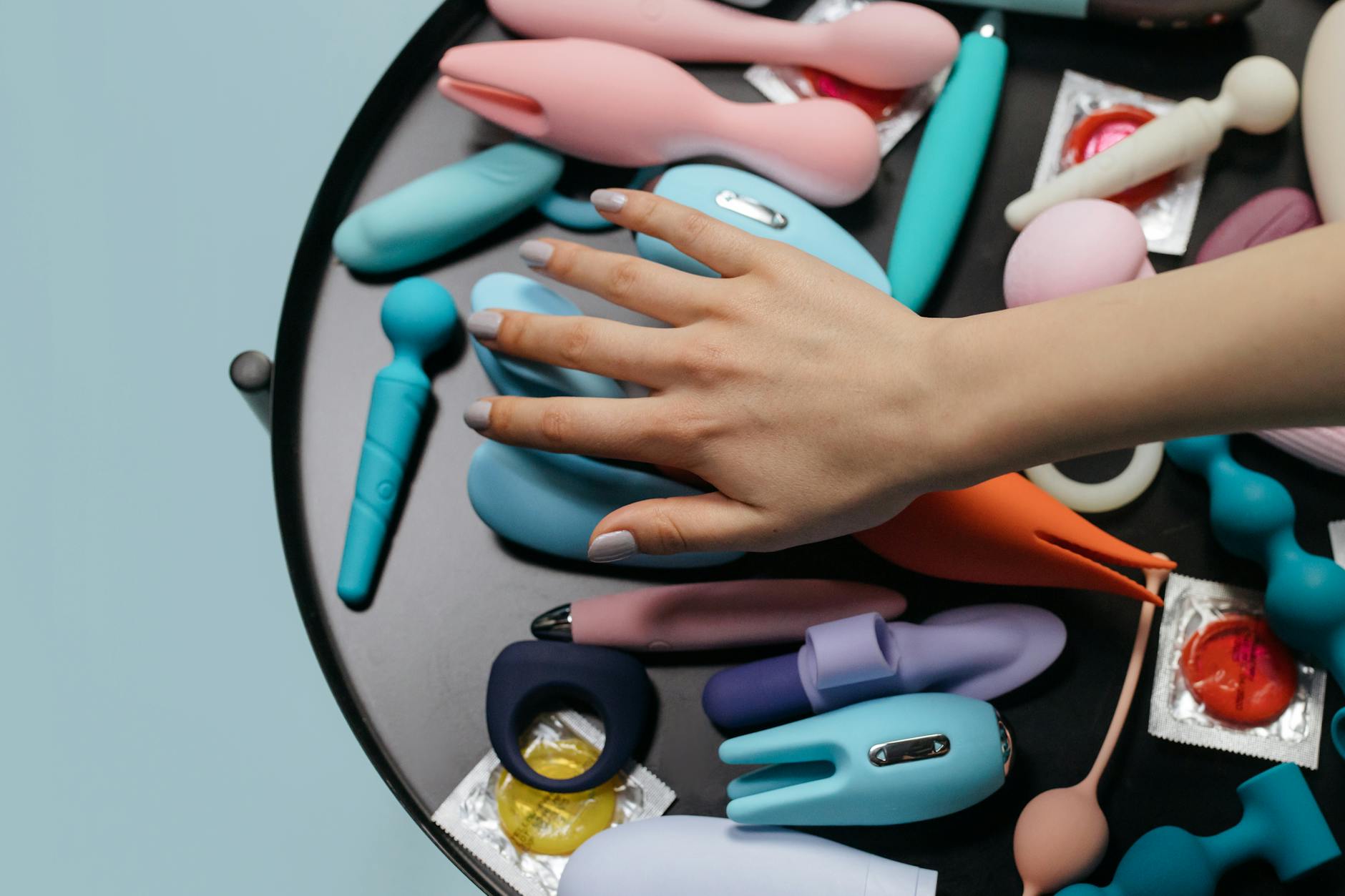
Let's talk about new relationships and real timing
New relationships come with their own rhythm. There's excitement, sure, but there's also uncertainty. You're learning how someone touches, what they want, what you want. Adding pleasure tools into that mix can feel complicated. It doesn't have to be.
If you're thinking about introducing a lemon vibrator to a new partner, or using one while building physical intimacy slowly, you're actually ahead of the curve. You're signaling that pleasure is collaborative, that communication matters, and that you're not apologizing for knowing what feels good.
Why go slow actually works better
Here's what the research on new relationships shows. Couples who rush physical intimacy often skip the conversation part. They assume compatibility or avoid talking about preferences because it feels awkward. Then six months in, they realize they've never actually discussed what they like.
Using a lemon vibrator early on, when you're deliberately moving slow, forces that conversation. It's built-in communication. You're not trying to fit into someone else's rhythm. You're setting a pace that honors both of you.
There's also a neurological piece. When you introduce pleasure tools in a low-pressure environment, the brain associates them with safety and exploration rather than performance. You get to build positive associations from the start.
Setting the conversation up beforehand
Don't ambush. Seriously. The worst approach is waiting until you're in bed to suddenly introduce a lemon clitoral vibrator. That surprises the nervous system in a way that rarely leads anywhere good.
Instead, bring it up casually. "I've been using this, and it feels amazing. I'd love to show you sometime, but only if you're curious" works perfectly. You're offering information, not issuing an invitation they feel obligated to accept.
If they're hesitant, ask why. Common concerns:
- "Will it make me feel inadequate?" (Answer: no. Vibrators are tools, not replacements. They do something your hand can't.)
- "Do you only want this because I'm not enough?" (Answer: this is about you knowing yourself, not about them failing.)
- "Isn't that kind of advanced?" (Answer: not even close. Lemon vibrators are designed for intuitive use and control.)
Listen to the concern underneath the question. Often it's "Do you still want me?" The real conversation is about reassurance, not the toy.
How to introduce it physically
Start with a conversation while you're clothed and not in a sexual situation. That removes performance pressure. You can say things like, "I want to show you what this does, but we can go at whatever pace feels right."
When you do introduce it, let them explore first. Many partners want to hold it, feel the vibration pattern, understand how it works before it comes anywhere near pleasure zones. That's healthy. Let curiosity lead.
You can guide by saying things like, "Start at the lowest setting" or "Hold it just outside the area first." Low-pressure coaching. If they ask questions, answer them. Don't make it mysterious.
One detail that matters: lemon suction vibrators, like Hello Nancy's Lem, work differently from traditional vibrators. They use gentle suction and pulsing rather than deep vibration. This actually makes them excellent for new couples because the sensation is less intense and more easeful. You're not jumping to the strongest setting. You're playing with pattern and pressure in a way that feels exploratory.
The pace question: how slow is slow enough
Here's what I see in my practice. Couples often confuse "slow" with "no progress." Going slow doesn't mean you never use the toy again after the first time. It means you're checking in, you're not making assumptions, and you're enjoying the learning curve.
You might use it together one week, then solo for two weeks while you settle into the relationship, then together again when it feels natural. That's a normal rhythm. You're not avoiding. You're just not forcing.
Some partners become curious after watching once. Others take longer. If you've had the conversation and they said "maybe later," then "later" is what you respect. Bringing it up repeatedly feels like pressure. Letting it exist as an option feels like trust.
Communication patterns that actually help
When you're using a lemon vibrator as part of a new relationship, small check-ins are your friend. "Does this feel okay?" "Want me to adjust the pattern?" "Are you enjoying this or should we try something else?"
These aren't clinical or awkward if you're already the kind of couple who talks during sex. And if you're not yet, this is a safe place to start. Vibrators create natural pauses. You can breathe, check in, shift position. The rhythm isn't relentless.
One thing partners often tell me: using lemon clitoral vibrators together actually made them feel closer. Not because of the toy, but because they had to be honest about what they wanted. Vulnerability builds connection.
What happens if they want to take the lead
Some partners want to use the lemon vibrator on you. That's wonderful. But set boundaries. "I like it when you hold it still, not moving around" or "I prefer the second pattern" gives them clear direction. Your pleasure isn't a mystery they have to solve. You're teaching them.
If they're learning to use it on you, you might need to guide their hand position or pressure. That's collaboration, not criticism. "Move it slightly up" or "A little lighter" are just directions, same as in any physical relationship.
This is also where the advantage of a lemon suction vibrator shows up. The sensation is more localized and easier to control than a deep vibrator. A partner can learn the right pressure and positioning quickly without you having to give constant feedback.
The emotional layer
Going slow in a new relationship signals something important to your nervous system and to theirs. It says, "We're building this carefully. Your comfort matters. My pleasure matters. We're both here."
That's not just good sex practice. That's the foundation of secure attachment. Neuroscientists who study bonding have found that couples who communicate about pleasure, who check in, who move at a mutually agreed pace, have better long-term relationship stability. It's not sappy. It's neurobiology.
If you're someone who's been hurt before, or who tends to people-please, this rhythm can be especially healing. Using a lemon vibrator slowly with a new partner is permission to say, "I know what I want." That's powerful.
When to reconsider the pace
If you've had the conversation and they're consistently dismissive, mocking, or pressuring you to not use it, that's data. Not all partners are ready for this level of honesty about pleasure. That doesn't make you wrong for wanting it.
Similarly, if they're pressuring you to use it when you're not ready, that's a boundary violation. "I like moving at this pace" is a complete sentence. You don't owe anyone faster progress.
The whole point of going slow is that you both get to feel secure. If someone feels threatened by a toy, or if you feel pressured to move faster, then the pace needs adjusting. Usually that means a conversation, not a capitulation.
FAQ
Can using a lemon vibrator with a new partner make them feel insecure?
It can, but usually not because of the toy. It's usually because of the conversation gap. If they learn about it from you ("Here's something I use and love") rather than discovering it unexpectedly, and if you frame it as "This is something I want to share with you" rather than "I need this because you're not enough," insecurity drops dramatically. Lemon clitoral vibrators are sleek and discreet, which also helps. There's nothing intimidating about the design itself.
Should I wait until we're more established before introducing a lemon sucker?
There's no magic timeline. Some couples do it in week three and it accelerates intimacy. Others wait months. The question isn't "When is it appropriate?" but "When do both of us feel safe enough to talk about it?" That's different for everyone. The advantage of going slow from the start is that you're already building the safety required for honest conversations.
What if they want to use the lemon vibrator but I'm nervous?
Nervousness is normal. You're letting someone new into your vulnerability. Start by using it solo while they're in the room, just so they can see what it does and how you respond. That takes pressure off both of you. They get to learn your body's signals without the performance demand of being the one controlling it.
Is it weird to talk about sensation and preference when we're just starting out?
Not weird. Actually the opposite. Early communication about what feels good is how you avoid years of bad sex later. Most long-term relationship problems around intimacy didn't start with a mismatch in desire. They started with avoidance of early conversations. This is you building a foundation.
Can we use lemon vibrators together if we've never talked about pleasure before?
Yes, but it works better with a quick conversation first. You don't need a long philosophical discussion. Just "I've been curious about trying this together. Would you be interested in exploring that?" If they say yes, that's your permission to move forward. If they say no, you respect that. The toy becomes a catalyst for the conversation, not a replacement for it.
What if we use it once and neither of us wants to again?
That's fine. You gathered information. You learned something about what you both like and don't like. That's useful data. Not every experience in a relationship has to become a habit. Going slow means you also accept that some explorations are one-time experiments, and that's healthy.
What actually happens next
Most couples I work with who introduce lemon vibrators early in a relationship report that it made them more comfortable talking about sex in general. The toy was the opener. After that, conversations about timing, preference, and fantasy feel less risky.
That's the real win. Not the toy itself, but the permission it gives you both to talk honestly. When you're moving slow with a new partner and you've already had conversations about pleasure and preference, the entire relationship shifts. You're building toward genuine intimacy, not just physical connection.
Take your time. Listen. Check in. Let curiosity lead, not pressure. A lemon vibrator is just a tool, but it's a tool that makes certain conversations easier and more grounded. Use it that way, and you're not just exploring pleasure together. You're building trust. And that's the real foundation.
If you want more guidance on navigating new relationships and intimacy conversations, get in touch. Sometimes having an outside perspective helps clarify what you need.