Let's start with the mismatch nobody talks about
You want fireworks. Your partner wants a gentle hum. You're ready in five minutes. They need twenty. You're thinking about it all week. They're thinking about it when it's actually happening. This isn't a compatibility problem. It's a sensitivity mismatch, and it's wildly common.
The frustration comes from assuming that if something feels amazing to you, it should feel amazing to them. It doesn't work that way. Sensitivity isn't about being "more sexual" or "less interested." It's neurological. Some people's nerve endings are simply wired to need more stimulation to cross the threshold into pleasure. Others get there fast and then risk overstimulation if the intensity stays the same.
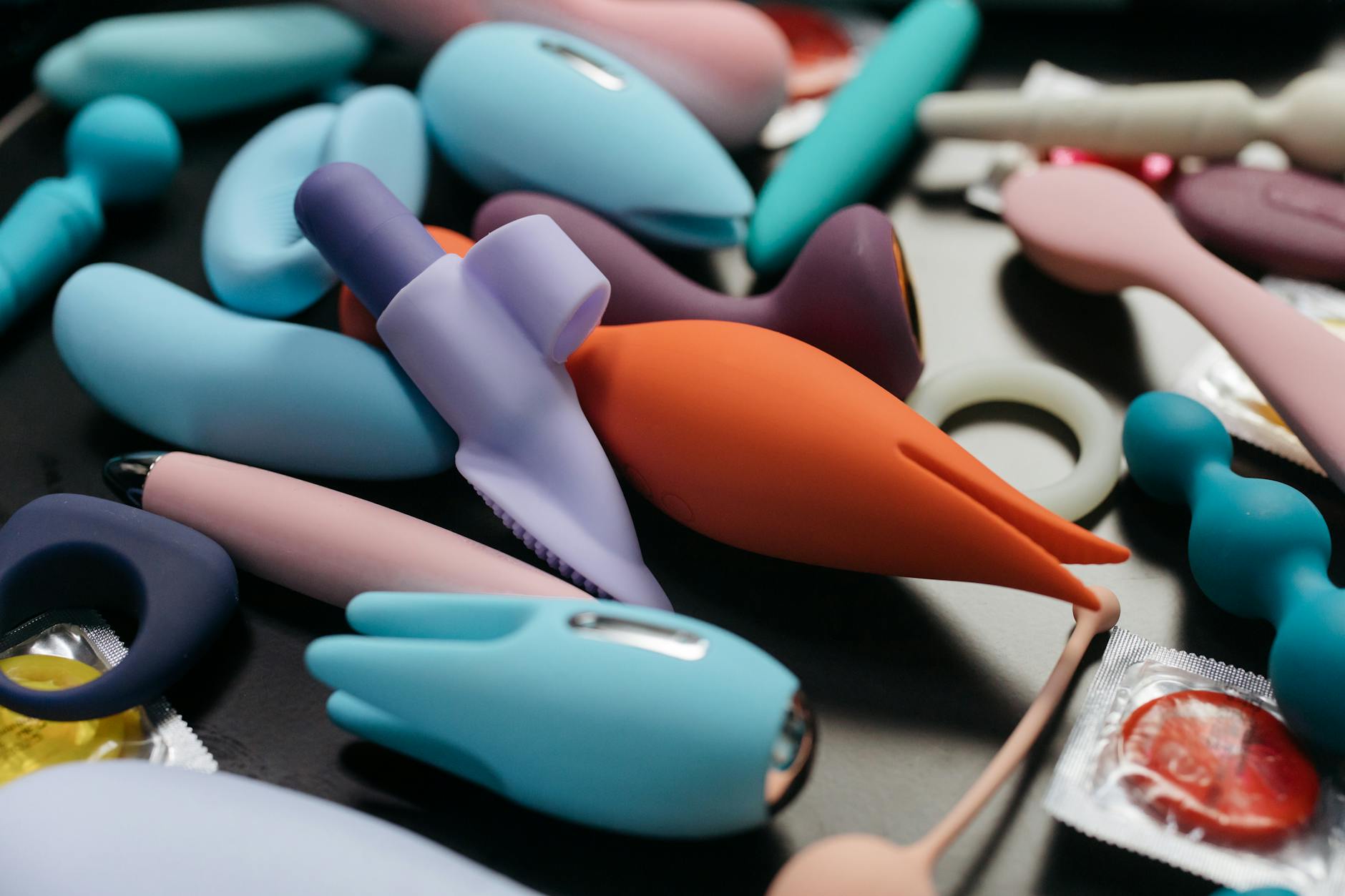
A lemon vibrator sits in a unique place here. It's precise, adjustable, and designed to deliver sensation without the one-note intensity of traditional vibrators. For couples where one partner needs variation and control while the other needs something more sustained, it becomes the tool that actually bridges the gap instead of highlighting it.
Why traditional vibrators often make this worse
Most vibrators come in two flavors: high-speed buzz or nothing. Some have a few intensity levels, but they're usually linear increases that don't actually change the sensation pattern. If you're someone whose body needs constant variety to stay interested, or someone whose nerves get fatigued by repetitive vibration, a standard vibrator leaves you managing your partner's pleasure, not sharing it.
A lemon clitoral vibrator works differently. The suction-based stimulation moves through a range of patterns rather than just getting "more intense." One partner might use patterns 1 through 3 for their entire experience. The other might move through patterns 5 through 8. Neither is wrong. Neither has to force themselves into the other's rhythm.
This matters because partnered sex with different sensitivity levels often becomes a performance. One person is trying to get there. The other is trying not to lose sensation. Nobody's actually present. A tool that lets both people stay in their own body while staying connected changes that dynamic entirely.
How to introduce it without making it a "thing"
If you've never used a toy together, jumping straight to a clitoral vibrator can feel loaded. Here's what actually works.
First, use it solo first. Explore what sensations feel good to you individually. This isn't about performance or proving something to your partner. It's about genuinely knowing your own body before you invite them into the experience. When you know which patterns make your body light up, you can actually show your partner what you like instead of trying to figure it out together under pressure.
Second, introduce it as a tool for both of you, not a substitute for your partner. The frame matters. "I want us to explore this together" lands differently than "I need this because you're not enough." Those aren't the same sentence. One builds curiosity. The other builds defensiveness.
Third, start with it during foreplay rather than as the main event. Use it for ten or fifteen minutes while you're already connected with your partner. This gives both of you time to adjust to the sensation and the dynamic without it feeling like the lemon vibrator is the point of sex.
The specific pattern strategy for mismatched sensitivity
Here's where lemon clitoral vibrators earn their place in coupled pleasure. The suction technology means you're not stuck choosing between "too much" and "not enough."
If you need lighter sensation, you're probably going to live in patterns 1 to 4. If your partner needs more intense stimulation, they might use patterns 6 to 8. The patterns don't feel like different speeds of the same thing. They genuinely feel like different sensations. One might be a rhythmic pulse. Another might be a rolling wave. Another might be a constant suction with a textured break.
Start with the understanding that you're not going to use the same pattern at the same time, and that's completely fine. Your partner is touching you with their hands, their body, their attention. The lemon vibrator is handling the specific nerve stimulation. You're not competing for the same sensation. You're layering different types of input.
Many couples find that one partner holds the vibrator while the other uses their hands. This keeps the physical connection intact while managing the intensity piece separately. It's more intimate than both of you being in your own heads about whether the sensation is working.
What changes when you stop fighting about speed
When couples first use a tool that allows different sensitivity levels, something shifts. The conversation moves from "Why don't you orgasm faster" or "Why do you go so hard" to actual curiosity about what feels good. Those are completely different conversations.
You might discover that your partner doesn't actually need intensity as much as they need the right kind of pattern. Or you might realize you were pushing for faster orgasms because you were anxious about whether your partner was enjoying themselves. Removing that pressure actually changes what both of you can feel.
Some partners report that using a lemon vibrator together is the first time they've both orgasmed at the same time without it feeling accidental. Not because the toy magically synchronizes you, but because you're both finally getting the exact stimulation your own body needs, and you can actually stay present with each other while that's happening.
It also reduces the performance pressure that kills arousal for so many people. When your only job is to hit a certain speed for your partner, you're not in your body. You're managing their body. A tool that lets each person access their own threshold means you can actually focus on what turns you on, not what turns them on.
The logistics that actually matter
A few practical things that make this smoother.
Always use lube with any lemon clitoral vibrator. Water-based works best. This isn't because anyone's "dry" or because there's something wrong. Lube changes how the suction feels and lets the toy glide more smoothly across different tissue, which means you can transition between patterns more easily. For partners with different sensitivity, lube is the difference between feeling in control and feeling buffeted around.
Start with the lowest pattern you think you'll need and work up from there. The temptation is to immediately jump to "the good part," but your body might surprise you. Partners with lower sensitivity often discover that patterns they thought would be boring are actually perfect for building arousal. Partners with higher sensitivity might find that patterns they thought were too gentle create a more interesting experience than they expected.
Communicate during, not after. "A little higher," "Stay here for a second," "Softer" are things to say while it's happening. Waiting until after to say "that didn't work" wastes time and creates anxiety. Communication in the moment is just the two of you solving a puzzle together. It's not failure.
The emotional piece you can't skip
Here's the part that feels less clinical but matters more than the mechanics. When you're using something like a lemon vibrator together, you're essentially saying "I trust you to know what your body needs, and I'm going to give you the space to explore that while I'm present with you." That's an act of intimacy that has nothing to do with the toy.
Many people with different sensitivity levels carry some shame about how their body works. The higher-sensitivity partner sometimes feels like they're too intense. The lower-sensitivity partner sometimes feels broken. A tool that normalizes both approaches without judgment actually heals something emotional, not just physical.
This is why introducing it as curiosity rather than fix matters so much. You're not saying "your body isn't working right." You're saying "I want to understand you better."
When this approach works best
Lemon clitoral vibrators solve this particular problem most effectively when both partners are willing to step out of the assumption that good sex means the same thing to both people. If you're still in the mindset that there's one "right" way to experience pleasure, a tool won't fix that.
But if you're already asking each other questions and genuinely curious about how your partner's body works, a lemon vibrator becomes a practical translation of that curiosity. It's a way of saying "I see that you're wired differently, and that's interesting to me instead of frustrating to me."
That shift in perspective is the real work. The vibrator just makes it easier to implement once you've already decided to try.
FAQ
Do we both have to enjoy the same pattern?
No. In fact, you probably won't. One partner might come back to pattern 3 every time while the other prefers patterns 7 and 8. That's not a compatibility problem. That's evidence that the tool is actually working because it's meeting both of you where you are.
What if my partner thinks I'm asking for a vibrator because they're not enough?
This is real, and it's worth addressing directly before you introduce the toy. Have the conversation separately from the sexual context. "I want to explore sensation together, and I think something like this would help us both feel less pressure" is a different conversation than "I need this because you can't satisfy me." Frame it as a tool for togetherness, not a replacement.
Can we use a lemon vibrator if one of us has never used a toy before?
Absolutely. In fact, using it together for the first time can feel less intimidating than doing it solo first. Just go slow, use plenty of lube, and start with lower patterns. Let your body adjust to the sensation before you ramp up.
What if we use it and realize we still have completely different needs?
That's useful information. You've moved from "something's wrong" to "here's what each of us actually needs." You can then decide if that's something you want to keep exploring together or if you need different tools or approaches. But you're working with actual data about your bodies, not assumptions.
Is it weird to have a partner hold the vibrator instead of using it myself?
Not weird at all. Many couples find this more intimate because it keeps you physically connected while managing the intensity separately. Your partner has agency in the sensation you're getting, which can feel more connected than solo use.
How do we clean it between uses if we're switching off?
Wash with warm water and toy cleaner before passing it back. A quick rinse with warm water is fine if you're both clean to begin with. The point is not to share bacteria, so basic hygiene between partners is the bar.
The real outcome
What actually shifts when couples with different sensitivity levels start using tools designed for precision and variation isn't just the physical experience. It's the permission both of you get to stop pretending you're the same and start actually connecting across the differences. A lemon vibrator is just the vehicle for that conversation. The real change is deciding that your partner's body working differently than yours is interesting instead of a problem.
If you're curious about exploring this together, start with a solo introduction first, then pick a low-pressure moment to bring it into partnered pleasure. You might discover that the biggest pleasure boost isn't the vibration itself. It's finally being able to ask for what you actually need without apology.