Here's what nobody tells you about anxiety and pleasure
Anxiety doesn't just make you feel worried. It colonizes your nervous system and locks down the pathways that allow arousal to happen at all. Your clitoris doesn't become numb because you're broken. It becomes unreachable because your brain has literally shut off the access road.
This is the difference between "not in the mood" and whatever's happening when you touch yourself and feel almost nothing. When anxiety is in charge, your body stops receiving pleasure signals even when they're being sent. It's not low desire. It's a disconnection so complete that desire can't even arrive.
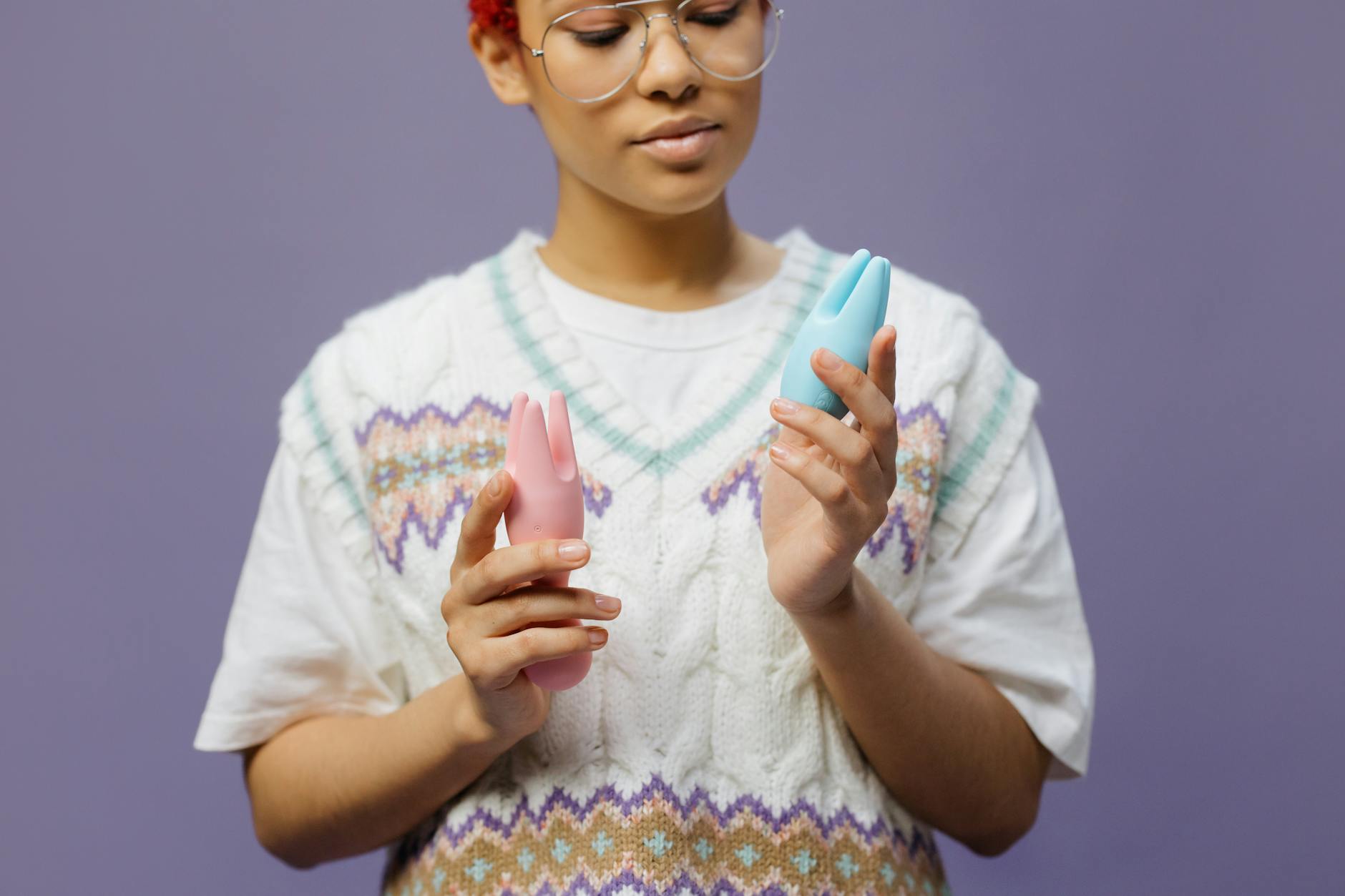
I started working with this pattern about five years ago, and what I've learned is that reconnection isn't a slow process of "relaxing more." It's a specific reset. And lemon clitoral vibrators are weirdly excellent at making that reset happen.
Why anxiety shuts down sensation in the first place
Your nervous system exists to keep you alive. When it detects threat (real or imagined), it upregulates your fight-flight-freeze response and downregulates everything else. Digestion stops. Libido stops. Sexual sensation stops. These aren't bugs. They're features of a very old survival system.
Anxiety doesn't have to be "about" sex to kill sexual sensation. You can be anxious about work, money, relationships, your body, the news, the future. As long as your nervous system is running a background threat assessment, your clitoris is offline.
What makes this worse is that we usually blame ourselves for it. "I should be able to focus." "Why can't I just relax?" The shame layer then adds another threat signal, which adds another layer of shutdown. You end up trapped in a feedback loop where anxiety kills sensation, shame about the dead sensation creates more anxiety, and sensation stays dead.
The only way out is to prove to your nervous system that sensation is safe again. This is where direct clitoral stimulation becomes a tool for nervous system reset, not just pleasure.
The neurology of why suction works when vibration feels like nothing
Traditional vibrators work by oscillation. They're rapid, constant, mechanical. For a nervous system in shutdown mode, they can actually feel like more pressure, more demand, more threat.
Lemon clitoral vibrators use suction. Instead of pushing sensation at your clitoris, they create a gentle vacuum that draws blood flow and heightens existing sensation. This is a crucial distinction. Suction doesn't demand arousal. It invites it.
From a neurological perspective, suction patterns are gentler on your parasympathetic nervous system because they mimic a natural form of stimulation. The pressure is indirect. The sensation builds gradually. Your body recognizes it as safe before it even realizes what's happening.
I've had clients describe it as the first time in months they actually felt their clitoris. That's not metaphorical. Anxiety was actively suppressing sensation. Suction cut through that suppression because it worked with the shutdown rather than against it.
How to actually use a lemon vibrator when reconnection feels impossible
The mistake most people make is treating this like normal sex. You're not trying to orgasm. You're trying to wake up nerve endings that anxiety has put to sleep.
Start low. Most lemon vibrators have multiple intensity levels. Use the gentlest setting. The point isn't to feel a huge amount of pleasure. The point is to feel something and prove to yourself that your body is still capable of receiving sensation.
Set aside 15 to 20 minutes when you're alone, when there's zero pressure, when you're not trying to accomplish anything. No goal. No timeline. If you feel nothing for the whole time, that's not failure. You're sending your nervous system a message: "Touch is safe. Sensation is safe. You can lower the threat alarm."
Repeat this regularly. Three times a week is ideal. Consistency teaches your body that this is reliable, safe stimulus. Over time (often within two to four weeks), sensation starts to return. Usually it's subtle at first. A slight tingle. A barely-there warmth. Then it builds.
As sensation returns, you can increase intensity slightly. But slowly. The goal is to rebuild the connection gradually, not to force pleasure back into existence.
When to separate anxiety-about-sex from general anxiety
Here's a hard truth: if the anxiety isn't addressed, pleasure will stay numb no matter what vibrator you use.
Some anxiety is about sex directly. "What if I can't orgasm?" "What if something's wrong with me?" "What if my partner judges me?" These respond well to nervous system resets and direct clitoral work.
But some anxiety is pervasive. Work stress, relationship tension, health fears, financial pressure. That anxiety is just parked everywhere, including in your sexuality. A lemon vibrator can help you reconnect to what's still there, but it won't fix the underlying anxiety. That needs actual intervention. Therapy, partner work, lifestyle changes.
The two aren't mutually exclusive. You can use a vibrator to rebuild sensation while also addressing the root anxiety. In fact, that combination is often the fastest path back to reliable pleasure.
The role of a partner (or lack thereof) during reconnection
If you're in a relationship, your partner can either accelerate or complicate the reconnection process.
Most partners mean well. "Let me help." "We can work through this together." But if you're anxiety-numbed, partner involvement usually adds more pressure. Now you're not just nervous about your body's response. You're nervous about their disappointment, their impatience, their expectations.
The most efficient path is usually solo reconnection first. Give your nervous system a chance to reset without the additional layer of performance anxiety. Once sensation starts returning reliably on your own, partner participation becomes easier and actually enhances the experience.
If you do want to involve your partner, the conversation should be explicit. "I'm doing nervous system work. This isn't foreplay. It's not about us right now. It's about me learning my own body again. I might ask you to be present, or I might ask you to give me complete privacy. I'll let you know." A partner who can hold that boundary without making it about them is a partner worth keeping around.
FAQ
Can anxiety kill sexual sensation permanently?
No. Sensation is always recoverable. Even after years of numbness, the nerve endings are still there. The pathways are still there. They're just offline. The right combination of nervous system reset, direct clitoral stimulation, and anxiety management will bring them back online. It sometimes takes patience, but it's not permanent.
How long before I feel sensation again?
It varies. Some people notice slight improvement within a week. Most start feeling real change within three to four weeks of consistent use. A few take longer. The key is consistency over intensity. Using a lemon clitoral vibrator three times a week is more effective than using it intensely once.
Is it normal to feel nothing at first?
Completely normal. If you've been anxiety-numb for months, your clitoris might feel like a stranger at first. You might feel pressure or contact but no pleasure. That's progress. You're proving to your nervous system that sensation is possible again. Pleasure usually follows.
Should I use a lemon vibrator alone or with a partner?
Alone, initially. Add a partner once sensation is returning consistently and you feel safe. The pressure of performing for someone else can reactivate the anxiety that caused the numbness in the first place. Solo reconnection is faster.
What if a lemon vibrator doesn't work for me?
If you've tried consistently (at least three sessions) and feel nothing, it might be that your anxiety is too active for even gentle suction to cut through. This is a sign to address the anxiety directly first, through therapy or another intervention. A vibrator is a tool for reconnection, not a replacement for anxiety treatment.
Can I use a lemon vibrator if I'm on antidepressants?
Yes. Antidepressants can themselves dampen sensation, but that's separate from anxiety-based shutdown. A lemon vibrator can still help you reconnect to what's available. If medication is killing sensation, a conversation with your doctor about timing or dosage adjustment is worth having, but don't wait to reconnect. Start now.
You're not broken. Your nervous system is just protective.
Anxiety is your body doing its job too well. When pleasure goes missing, it's not because you're defective. It's because your nervous system decided pleasure was a threat it needed to defend against.
The good news: that can change. A lemon clitoral vibrator, used consistently and with permission, speaks directly to your nervous system in a language it understands. Gentle. Gradual. Safe. Over time, your body learns that sensation is allowed again. Pleasure becomes possible again.
Start small. Be patient with yourself. If you need support navigating anxiety's role in your sexuality, that's exactly what therapy is for. You deserve to have sensation back. And your body, given the right conditions, almost always cooperates.